


Oil Surges Past 117 Dollars as Fears of a New Iran–US War Mount
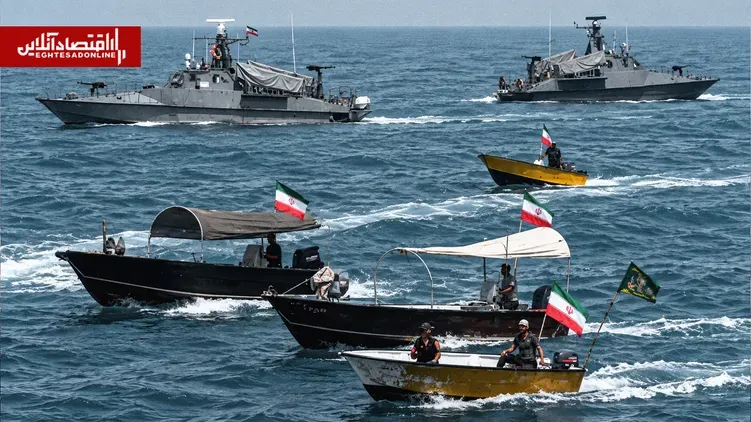
EghtesadOnline: Brent crude has climbed above 117 Dpllars a barrel as concerns over maritime security in the Strait of Hormuz intensify. With diplomatic efforts stalled and both sides weighing their military options, the risk of renewed confrontation between Iran and the United States is once again at the center of regional developments.
Political Desk: The specter of war is once again looming over the Middle East. Iran is seeking to raise the cost of any renewed US and Israeli attack by threatening energy infrastructure, military bases and regional communication networks. However, the erosion of Iran’s missile capabilities, pressure on air-defense systems and electoral considerations in Washington and Tel Aviv are making the prospect of another confrontation increasingly complex.
The Strait of Hormuz and Pressure on the Global Economy
Brent crude’s rise above 117 Dollars a barrel, at the time of publication, coincides with disruptions to maritime traffic through the Strait of Hormuz, underscoring the growing risk of escalation in the Iran–US crisis. Iran’s Islamic Revolutionary Guard Corps (IRGC) has warned that the continuation of the current situation could lead to attacks on US military bases in the region. Meanwhile, negotiations aimed at ending the war have remained inconclusive for months, while attacks on vessels along the southern approaches to the strait have increased.
Iran has warned that, if the United States and Israel resume their attacks, its response will not be limited to American bases and naval forces. Energy infrastructure, airports and other civilian targets in Gulf Arab states could also come within the scope of Iranian retaliation.
US President Donald Trump has accused Iran of spreading what he calls “fake news” to drive up oil prices ahead of the November 3 midterm elections. Yet, regardless of the political motivations of Tehran and Washington, continued insecurity in the Strait of Hormuz and a substantial decline in maritime traffic compared with pre-war levels suggest that energy markets are responding more to conditions on the ground than to political statements or Trump’s claims that the waterway remains open.
Deterring Attacks by Threatening Regional Infrastructure
Iran’s declared strategy is based on expanding the geographical scope of any potential conflict. An attack on Iranian territory could trigger threats against a broader range of US military and economic interests, as well as those of its regional partners.
During the initial phase of the war, Iranian attacks caused damage to US bases, embassies and the headquarters of the US Fifth Fleet in Bahrain. Energy and industrial facilities in the United Arab Emirates, a major gas complex in Qatar, and airports in Dubai, Kuwait and Bahrain were also targeted.
Iran is now seeking to make the risk of a wider regional war a central part of Washington’s future calculations. Iranian officials have reportedly told mediators that, if the United States launches another attack, economic targets across the Gulf could also be struck.
The threats have even extended to undersea internet cables running through the Strait of Hormuz. Disruptions to these networks could affect regional communications and parts of the global data infrastructure.
Analysts say the view that deterrence requires imposing immediate, sustained and significant costs on adversaries has gained traction in Iran. This approach could mean greater reliance on asymmetric capabilities, including drones, maritime attacks and strikes against sensitive infrastructure. Such tools can sometimes inflict substantial economic damage at a relatively low cost.
Has Iran’s Missile Capability Been Destroyed?
One of the most important variables in the crisis is how much capacity Iran retains to sustain attacks over time. Estimates suggest that Iran may still possess hundreds to thousands of ballistic missiles. US and regional officials believe Iran’s armed forces have resumed missile production on a limited scale using stored components and underground facilities.
In September, the Pentagon claimed that the United States had destroyed up to 90% of Iran’s industrial capacity in the drone, ballistic missile and naval sectors. However, that assessment appears difficult to reconcile with Iran’s remaining missile and drone capabilities and the volume of launches recorded in the final days of the 40-day war.
Recent Iranian attacks, including a missile strike on Jordan’s Muwaffaq Salti Air Base that reportedly killed three US service members, as well as Iranian missiles approaching US naval vessels in September, have raised further questions about American assessments of Iran’s remaining capabilities.
Another uncertainty concerns allegations that Iran has used Chinese satellite intelligence and imagery. China has denied accusations of involvement.
Electoral Calculations in the United States and Israel
Meanwhile, signs of increased US military readiness have coincided with efforts to reduce the vulnerability of American personnel. The deployment of a third carrier strike group and a Marine expeditionary unit to the Middle East, alongside the withdrawal of some personnel from regional bases and a US State Department order for non-essential government employees and their families to leave Saudi Arabia, presents a dual picture of Washington’s strategy.
On one hand, the United States is expanding its capacity for military action. On the other, it is attempting to reduce the risk of casualties if hostilities intensify.
Trump has warned that an attack on Iran could be considered after the November 3 midterm elections. Israel, meanwhile, is also approaching an election.
Israeli Prime Minister Benjamin Netanyahu has denied a Financial Times report that Trump blocked an Israeli plan to attack Iran this month. However, Israel’s Channel 13 has reported that IDF Chief of Staff Eyal Zamir told a private meeting that he saw no operational necessity for an attack before the election.
Opposition leader Yair Lapid has also accused Netanyahu of dangerously drawing national security into the electoral contest.
These disagreements suggest that there is no clear consensus in either Iran or the United States over the timing or necessity of another attack. However, the absence of agreement does not mean that renewed hostilities have been ruled out.
Diplomacy at an Impasse?
Against this backdrop, a meeting of foreign ministers from seven countries in Istanbul—bringing together representatives from the United Kingdom, France, Germany, Turkey, Saudi Arabia, Pakistan and Egypt—is seeking to coordinate positions on the Strait of Hormuz and the broader Middle East crisis.
The meeting is also addressing developments in Palestine and Yemen, as well as efforts to end the war between Russia and Ukraine. However, Britain's stated focus on the Strait of Hormuz and the situation in Saudi Arabia highlights the urgency of the regional security crisis.
Despite these diplomatic efforts, negotiations have so far failed to bridge the gap between Tehran and Washington. The United States is seeking nuclear concessions, while Iran is unwilling to negotiate over its nuclear program before a naval blockade is lifted and sanctions are removed.
Another complication is that both sides appear determined to strengthen their deterrent positions before returning to negotiations. Although this strategy may improve their bargaining power in the short term, it also increases the risk of miscalculation.
Vali Nasr, a former senior adviser to the US State Department, has warned against dismissing Iran’s threats as a bluff, arguing that Tehran has repeatedly managed to surprise its adversaries during the war.
His warning, combined with mounting pressure on energy markets and heightened military readiness on both sides, underscores the importance of an effective diplomatic path.
For now, however, neither Iran nor the United States appears willing to make the concessions necessary to reach common ground and bring the conflict to an end.