


A New Military Alignment in the Middle East: Will Saudi Arabia’s Allies Join the War in Yemen?
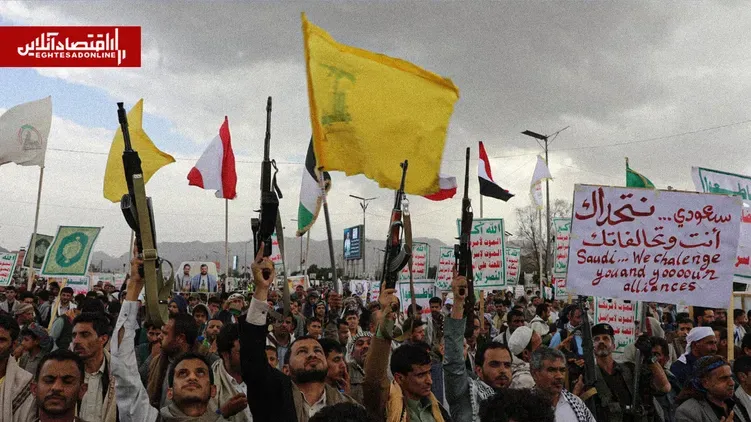
EghtesadOnline: Recent developments in the war between Saudi Arabia and Yemen’s Houthi movement point to the possibility of a broader coalition against the group. Increased military support for Riyadh could push the conflict beyond Yemen’s borders and reshape the region’s security dynamics.
Political Desk: The war between Saudi Arabia and Yemen’s Houthis has entered a sensitive phase, with reports of possible Egyptian military support for Riyadh, Pakistan’s security role and defense agreements involving Saudi Arabia, Turkey and Pakistan raising concerns about a wider conflict. At the same time, reported attacks on Saudi Arabia’s critical infrastructure and the strategic importance of the Red Sea and the Bab al-Mandab Strait have made the crisis a matter of regional security beyond Yemen’s internal conflict.
However, political and defense support for Saudi Arabia must be distinguished from preparations to deploy troops or direct participation in combat. Reports concerning the deployment of Egyptian forces and the involvement of other countries in military operations require independent confirmation.
Egypt Prepares to Enter the Military Equation
Israel’s Channel 14 has claimed that Egypt is preparing to deploy thousands of troops and heavy military equipment to Saudi Arabia to help counter Yemen’s Houthis. The report comes as Egyptian President Abdel Fattah el-Sisi has emphasized his country’s readiness to defend Saudi Arabia.
For Cairo, developments in Yemen are not merely a regional security issue. Security in the Red Sea and the continued movement of commercial vessels through its shipping routes are directly linked to Egypt’s economic interests. Prolonged disruptions to Red Sea shipping could affect revenues from the Suez Canal and impose additional economic costs on the country.
From this perspective, Egypt’s support for Saudi Arabia reflects both its longstanding strategic partnership with Riyadh and its interest in protecting vital international trade routes. However, readiness to support Saudi Arabia does not necessarily mean that the Egyptian military will directly enter the war.
Saudi Oil Infrastructure Under Attack
Reported attacks on Saudi airports and energy facilities have once again highlighted the vulnerability of the kingdom’s critical infrastructure to missile and drone strikes. A large military budget and advanced air defense systems do not guarantee complete protection against asymmetric attacks, particularly when a country must defend vast territories and widely dispersed facilities simultaneously.
The expansion of the Houthis’ missile and drone capabilities poses a significant challenge to Saudi Arabia’s defense strategy. Riyadh faces two costly options: refraining from a major response, which could weaken its deterrence, or intensifying military operations, which could trigger retaliatory attacks and expand the conflict.
Strengthening defense cooperation with regional allies could form part of Saudi Arabia’s response. However, the effectiveness of such cooperation will depend on the type of military assistance provided, the level of operational involvement and the allies’ ability to counter incoming attacks.
What Do Pakistan and Turkey’s Defense Agreements Mean?
Pakistan and Turkey also play a role in Saudi Arabia’s security calculations, although the nature and extent of their involvement differ.
Pakistan has longstanding security ties with Saudi Arabia, and closer defense cooperation could pave the way for increased military support for Riyadh. At the same time, Islamabad must consider its own security and economic interests in its relationship with Iran, making direct participation in the war a complex decision.
Turkey is pursuing a similar balancing act, combining defense cooperation with Saudi Arabia with efforts to maintain diplomatic channels with Tehran. Turkish President Recep Tayyip Erdoğan has discussed pursuing the defense agreement with Saudi Arabia through the relevant legal and parliamentary procedures, while Foreign Minister Hakan Fidan has expressed Ankara’s readiness to address Riyadh’s technical and military needs.
Meanwhile, diplomatic contacts between Turkey and Iran suggest that Ankara is seeking, at least publicly, to prevent the crisis from escalating. However, the extent of Tehran’s influence over Houthi military decisions and the ability of regional powers to shape the course of the war remain important uncertainties.
Bab al-Mandab: A Strategic Chokepoint in the Yemen War
The significance of the Yemen war extends beyond the country’s territory and Saudi Arabia’s security. The Bab al-Mandab Strait is one of the world’s most important maritime chokepoints, connecting the Red Sea to the Gulf of Aden and routes leading toward the Indian Ocean.
Any disruption to this passage could affect maritime transport, shipping insurance costs, delivery times and international trade. Consequently, control over Yemen’s western coastal areas and military developments around Bab al-Mandab have implications far beyond the battlefield.
The struggle over these areas could also affect the interests of Arab states, global powers and countries dependent on maritime trade. From this perspective, an expanding conflict would threaten not only regional security but also potentially increase uncertainty in global energy markets and international commerce.
Will the New Coalition Trigger a Regional War?
Increased military support for Saudi Arabia could strengthen the kingdom’s defensive capabilities, but it would not necessarily guarantee a reduction in hostilities. If foreign assistance develops into direct participation in military operations against the Houthis, the risk of retaliation and a wider geographic spread of attacks could increase.
Conversely, maintaining diplomatic channels with Iran and seeking to contain the conflict could help prevent further escalation. The central question is whether Saudi Arabia’s partners will limit their involvement to strengthening deterrence and protecting critical infrastructure or extend their support to offensive operations inside Yemen.
Overall, a broader defense alignment around Saudi Arabia could change the dynamics of the Yemen war. However, whether this develops into a regional conflict will depend on the operational decisions of the countries involved, the Houthis’ response and developments in relations between Iran and the United States.