


EU Moves to Tighten Trade Restrictions on China as Deficit Nears €360 Billion
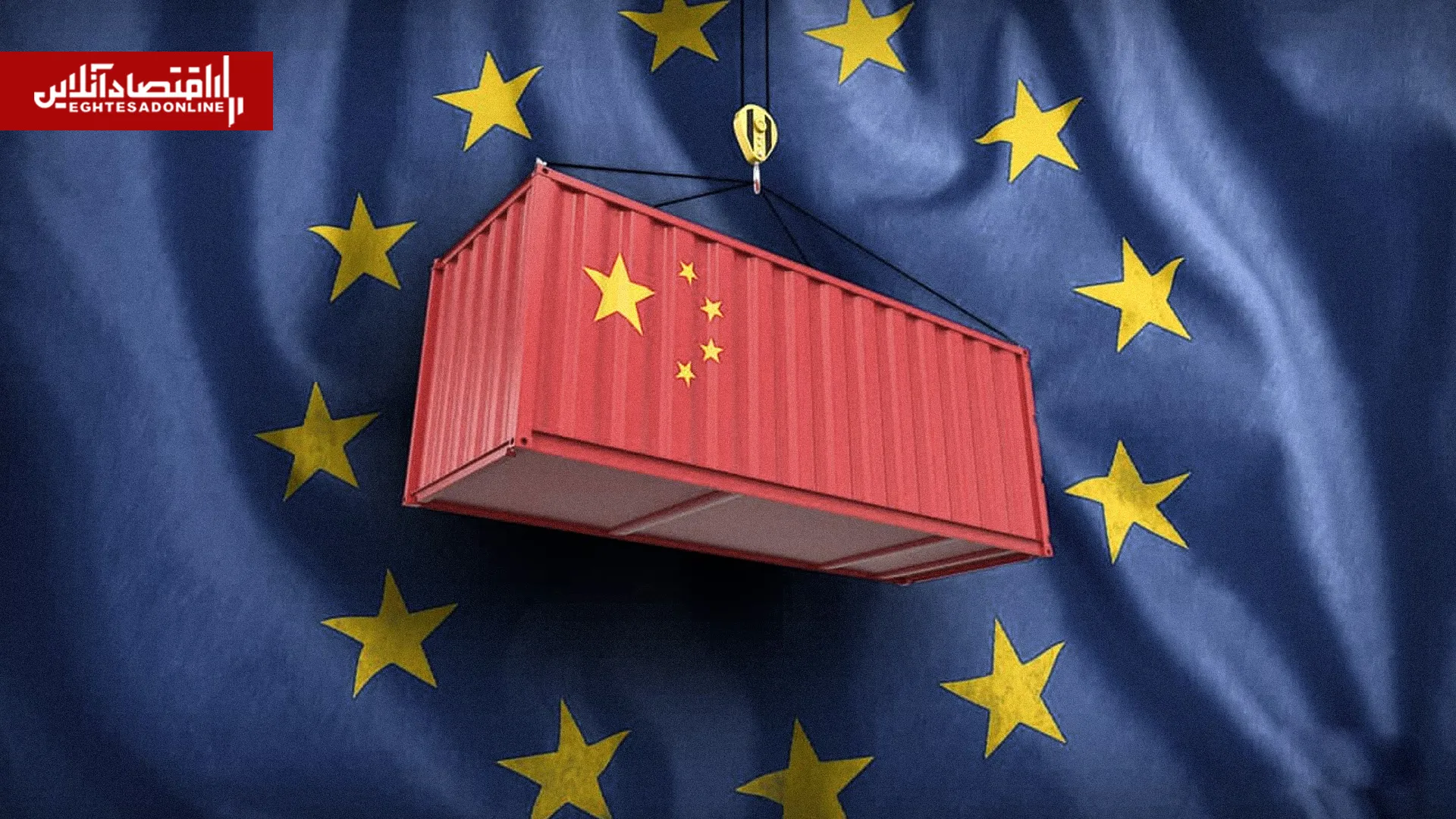
EghtesadOnline: The European Union is seeking to expand trade restrictions on China as its trade deficit with Beijing approaches €360 billion a year, intensifying concerns over the future of European industries and jobs. An agreement on hybrid vehicle imports marks the first step in a broader effort that could extend to chemicals, plastics and other manufacturing sectors.
Global Economy: Economic relations between Europe and China were established in 1975, with the two sides signing their first trade agreement in 1978. In the decades that followed, expanding trade and investment became central to their economic relationship.
China’s accession to the World Trade Organization in 2001 marked a turning point in its integration into the global economy. As its manufacturing capacity expanded, infrastructure developed and exports increased, China became one of Europe’s most important suppliers of goods. European companies, meanwhile, gained access to a vast Chinese market for machinery, vehicles, pharmaceuticals and other industrial products.
In 2019, the European Union formally defined China through three distinct roles: a partner for cooperation, an economic competitor and a systemic rival.
Trade figures, however, highlight the growing imbalance between the two sides. The value of EU goods imports from China rose from €295.9 billion in 2015 to approximately €559.4 billion in 2025. Over the same period, EU goods exports to China increased from €145.6 billion to around €199.6 billion.
As a result, the EU’s goods trade deficit with China reached approximately €359.8 billion in 2025.
October 16: Brussels Announces Plans for New Import Restrictions
The latest development came on October 16, 2026, when European Commission President Ursula von der Leyen announced, following an EU leaders’ meeting in Brussels, that the Commission would propose measures to restrict Chinese imports beyond the recently agreed arrangements for hybrid vehicles.
According to Reuters, von der Leyen stressed that the vehicle agreement alone would not resolve the structural imbalance in EU-China trade. Pointing out that the EU’s goods trade deficit with China had exceeded €1 billion a day, she said European industries had called for action and that the Commission would respond to their demands.
The announcement signals a broader shift in Brussels’ approach, as European policymakers seek to protect domestic manufacturing and address growing concerns about the competitive pressure exerted by Chinese imports.
What Has the Hybrid Vehicle Agreement Changed?
The first concrete step in this direction was an agreement between the EU and China on imports of hybrid and plug-in hybrid vehicles.
According to details published by The Guardian on October 12, annual imports of these vehicles into the EU will be capped at 350,000 units. The restriction is scheduled to take effect in December 2026 and is intended to limit the market share of Chinese vehicles.
The agreement comes amid a rapid increase in Chinese hybrid vehicle exports to Europe. According to The Guardian, the value of China’s hybrid vehicle exports to the EU reached €6.7 billion in the first half of 2026, up from €2.2 billion in the same period a year earlier.
However, Chinese vehicles assembled at factories within the EU, including facilities in Hungary, will be exempt from the quota. This means Chinese manufacturers can continue to access the European market through local production.
China has also agreed to remove certain tariffs on automotive components and reduce import duties on selected European products, including footwear, olive oil and ice cream, according to The Guardian.
Which Rules Could Change, and Which Industries Are at Risk?
Following the vehicle agreement, discussions in Brussels have increasingly focused on developing tools that would allow the EU to respond more quickly to external trade pressures.
On October 16, von der Leyen said the European Commission was developing a new instrument that could restrict certain goods’ access to the EU single market under specified circumstances.
She also announced that the Commission would present a proposal in December aimed at reducing European companies’ dependence on single sources for critical supplies.
The potential implications extend beyond the automotive industry. Chemicals, plastics and other manufacturing sectors could face additional restrictions as the EU considers measures to address what it views as an increasingly unbalanced trading relationship with China.
The broader objective is to reduce vulnerabilities in European supply chains while giving policymakers greater flexibility to respond to external economic pressure.
China’s Response: A Deal to Prevent Escalation or a Trade Concession?
Beijing has pursued two parallel strategies in response to Europe’s trade measures: negotiating to preserve access to the European market and warning that EU policies must not discriminate against Chinese companies.
On October 12, China’s Ministry of Commerce announced that the hybrid vehicle agreement had been reached following three months of negotiations.
According to Reuters, Beijing emphasized that the new arrangements should preserve opportunities for export growth and ensure that China’s export quota for hybrid vehicles to the EU would not be lower than those granted to other countries.
The agreement therefore reflects an effort by both sides to manage trade tensions without allowing them to escalate further. For China, maintaining access to the European market remains important; for the EU, the challenge is to address industrial concerns without triggering a broader confrontation with one of its largest trading partners.
What Happens Next?
The next major milestone is the European Council meeting scheduled for December 17–18, 2026, which could provide greater clarity on Brussels’ next steps in addressing the trade imbalance with China.
The European Commission has said it will present proposals in December to reduce European companies’ reliance on limited sources of critical supplies and establish mechanisms for responding more quickly to external economic pressure.
Taken together, these developments point to a shift in Europe’s economic strategy. Rather than relying primarily on expanding exports to China, the EU is moving towards tighter controls on imports, stronger safeguards for domestic industries and a more deliberate effort to reduce industrial dependence on Chinese supply chains.
The outcome could reshape trade relations between the two economic powers, with implications extending well beyond cars to the wider European manufacturing sector.