


Behind Lavrov’s Visit to Iran: What Is Moscow’s Mission in Tehran?
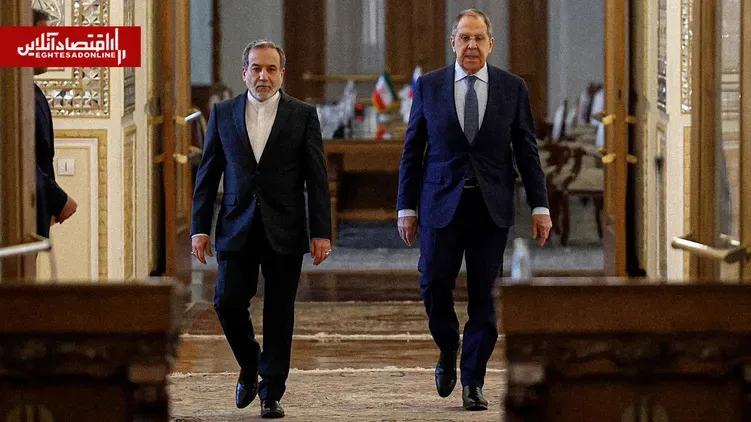
EghtesadOnline: Russian Foreign Minister Sergei Lavrov’s visit to Tehran comes as tensions between Iran and the United States remain high over the Strait of Hormuz, sanctions and the nuclear issue. With regional governments increasingly concerned about a renewed war, Moscow is seeking to preserve its influence while balancing its strategic partnership with Iran against its growing economic ties with persian gulf states.
Political Desk: The arrival of Russian Foreign Minister Sergei Lavrov in Iran has drawn considerable attention as tensions between Tehran and Washington intensify. The visit marks the first trip by a Russian official to Iran since the 40-day war. During his visit, Lavrov met with the Iranian president and foreign minister.
Reports suggest that preventing a return to large-scale hostilities is among the main objectives of the visit. However, the message Lavrov has brought to Tehran remains a central question.
Russia’s Foreign Ministry said the talks would focus on the regional crisis, economic cooperation and ways to reduce tensions. Russia’s state news agency TASS also reported that Lavrov would brief Iranian officials on the outcome of his consultations with foreign ministers from Gulf Cooperation Council (GCC) member states in Manama.
But can Russia mediate between Iran and the United States and help prevent another war? And does Moscow have more to gain from continued tensions or from a lasting de-escalation?
Carrying a Message from Manama
The significance of Lavrov’s visit becomes clearer when viewed in the context of Russia’s two parallel diplomatic tracks. On one hand, Moscow is seeking to maintain and expand its strategic cooperation with Gulf Arab governments. On the other, Russia has secured substantial economic benefits from the US war with Iran.
Before arriving in Tehran, Lavrov attended the ninth Russia–GCC Strategic Dialogue meeting in Bahrain. In Manama, he stressed the need for direct dialogue between the Gulf’s coastal states and their neighbours, including Iraq and Jordan. The proposal aims to establish a regional framework for discussions on security and de-escalation.
Iran has previously warned that if hostilities resume, it will attack all US positions and interests across the region. Tehran has also threatened to target with missiles any country that provides assistance to the United States for an attack on Iran.
If a future conflict expands to include energy infrastructure, facilities across the Gulf Arab states could also come under attack, raising the stakes for regional governments and global energy markets.
Can Russia Mediate Between Iran and the US?
Until now, Russia had largely limited itself to calling for de-escalation between Iran and the United States, without taking tangible steps towards mediation. Moscow now appears to be seeking a more active role by leveraging its position as a partner of Tehran and a diplomatic interlocutor with Arab governments.
Russian President Vladimir Putin has also expressed Moscow’s readiness to contribute to mediation efforts in recent meetings with Iranian President Masoud Pezeshkian.
Some unofficial reports from the Manama meeting suggest that GCC member states have asked Moscow to use its diplomatic influence to help halt Iranian attacks against countries in the region.
The central complication, however, is that Russia has significant interests tied to the continuation of the US–Iran conflict.
Energy arrangements involving US President Donald Trump and Putin, aimed at preventing energy prices—particularly diesel prices—from rising further, alongside broad exemptions allowing Russian oil sales and the suspension of the implementation of a new comprehensive sanctions law against Russia, have all emerged as gains for Moscow amid the Iran war.
These gains have also strengthened Russia’s leverage in its war against Ukraine. Before these developments, Russia had been facing sustained and effective Ukrainian attacks on its energy infrastructure and was going through one of the most difficult years of its war with Ukraine.
This creates a fundamental question over the extent to which Moscow is genuinely prepared to help bring the conflict to an end.
Iran and Russia: A Strategic Partnership?
Lavrov’s visit is not limited to the Iran–US conflict. According to Russia’s Foreign Ministry, the agenda also includes trade, economic cooperation, investment, and joint energy and transport projects.
Moscow and Tehran are also expected to discuss coordination within the United Nations, BRICS, the Shanghai Cooperation Organisation and the Eurasian Economic Union.
The comprehensive strategic partnership treaty signed by the two countries in 2025 provides a framework for expanding bilateral cooperation. However, unlike some of Russia’s security treaties with other countries, the agreement does not establish a mutual defence obligation.
At the same time, Russia is seeking to expand its economic relations with Arab countries. Speaking at the Manama meeting, Lavrov said Russia’s trade with GCC member states had increased by approximately 45% in 2025, reaching nearly $19 billion.
The figures highlight Moscow’s efforts to maintain channels of communication with multiple regional actors. Within this broader strategy, Russia’s relationship with Iran remains an important diplomatic asset.
Closer cooperation with Tehran helps Moscow preserve its position in regional affairs, while stronger economic ties with Arab governments serve Russia’s commercial interests and expand its diplomatic influence.
The challenge is that these two tracks may become increasingly difficult to maintain if tensions between Iran and its Arab neighbours escalate further.
Lavrov’s Mission in Tehran
A renewed escalation could expose the limits of Russia’s balancing strategy. In the event of another major war, Moscow may find it increasingly difficult to maintain its relationships with opposing sides while protecting its own economic and strategic interests.
Russia has reason to prefer a controlled level of tension over a full-scale conflict, whose consequences could be difficult to predict. The question is whether Moscow can offer concrete proposals capable of unlocking stalled negotiations and preventing a new round of hostilities.
The differences between Washington and Tehran remain substantial. The United States is insisting on concessions over Iran’s nuclear programme, while Iran has so far indicated that its initial willingness to negotiate centres on the Strait of Hormuz and the terms of a new arrangement for managing the strategic waterway.
Meanwhile, the continuation of a neither-war-nor-peace situation, combined with a naval blockade, could become increasingly difficult for Iran to sustain over the long term.
Unlike Moscow, which has benefited from some of the economic consequences of the conflict, Tehran has a direct interest in finding a way out of the current impasse.
Lavrov’s visit could therefore offer Russia an opportunity to strengthen its diplomatic standing. But whether Moscow is prepared to use its influence to help end the crisis—or primarily to preserve its position within it—remains the central question surrounding his mission in Tehran.