


Diplomacy Amid War Fears: What Is the Mission of Regional Officials in Iran?
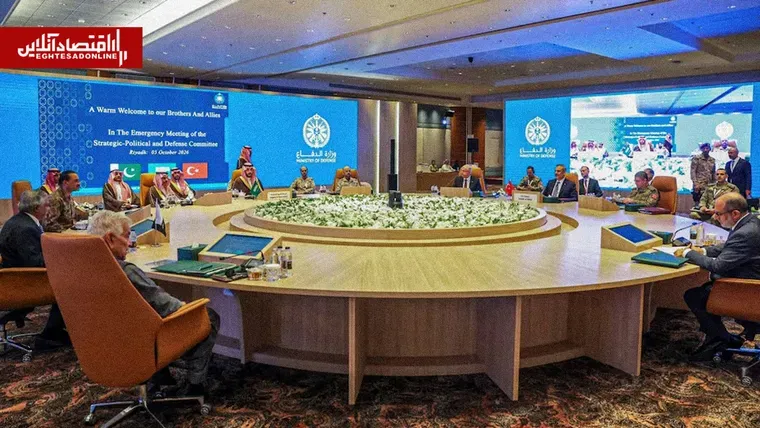
EghtesadOnline: Diplomatic activity in the region continues. Following the arrival of a Qatari delegation, senior security and military officials from Saudi Arabia, Turkey and Pakistan have traveled to Iran, at a time when tensions between Iran and the United States are threatening to escalate once again, potentially leading to renewed military confrontation.
Political Desk: The region is once again gripped by fears of war. However, visits by Qatari mediators, followed by the presence of senior security and military officials from Turkey, Saudi Arabia and Pakistan in Tehran, point to regional efforts to contain the crisis between Iran and the United States. These efforts come six days after Asim Munir's visit to Tehran, but face serious obstacles amid Washington's military readiness, escalating attacks in the Strait of Hormuz, and the intensifying conflict involving the Houthis and Saudi Arabia.
Iran is hosting senior officials from Turkey, Saudi Arabia and Pakistan as prospects for a diplomatic breakthrough appear increasingly slim. Neither side has so far been willing to accept the other's conditions for reaching an understanding.
From Qatar's Message to a Three-Way Meeting
A day before officials from the three countries belonging to the so-called Mecca Pact arrived, a Qatari delegation traveled to Tehran. The visit was initially conducted discreetly and officially confirmed a day later. Reuters reported that the United States sent the Qatari delegation to Tehran amid rising gasoline prices. According to the Iranian Foreign Ministry spokesperson, the visit was both bilateral in nature and connected to Doha's mediating role in relations between Tehran and Washington.
So far, however, these visits have failed to bring the two sides closer together. The US military posture in the region also underscores the lack of progress in negotiations. According to reports, during Asim Munir's previous visit, Iranian officials told him that Tehran would not negotiate with Washington until its conditions were met. Meanwhile, Donald Trump warned on Friday that the United States could launch another military operation against Iran.
According to Iranian Foreign Minister Abbas Araghchi, Iran has presented mediators with a seven-day proposal under which the United States would lift its naval blockade and sanctions within six days, after which Iran would reopen the Strait of Hormuz.
The Impact of the Iran-US War on Saudi Arabia
The proposed joint meeting between the three countries is also significant in the context of mediation between Iran and the United States. The meeting was proposed by Asim Munir. According to Iranian officials, President Masoud Pezeshkian and Mohsen Rezaei, secretary of Iran's Supreme National Security Council, will also attend.
The presence of Saudi Defense Minister Khalid bin Salman in Tehran is one of the meeting's most significant aspects. Riyadh is part of a joint defense agreement with Turkey and Pakistan, while in recent weeks it has also faced intensified missile and drone attacks by Yemen's Houthis. These attacks have drawn Saudi Arabia into the conflict, leaving the kingdom concerned that missile attacks could intensify if war between Iran and the United States resumes.
Speculation has even emerged about a possible proposal for Iran to join the pact. The agreement was signed in August and stipulates that an attack on one member country would be considered an attack on all members. However, the Saudi defense minister's presence in Tehran should not, by itself, be interpreted as evidence of a strategic shift by Riyadh or a distancing from Washington. Saudi Arabia appears to be seeking every possible means of preventing a wider war that could threaten its territorial security and economic interests.
Another indication that Saudi Arabia is preparing for potential conflict is its plan to store crude oil in underground facilities in Singapore starting in the second half of next year. Officials from both countries have said the initiative is intended to strengthen the security of oil supplies to Asian markets. Establishing reserves close to consumer markets, alongside Saudi Aramco's previous experience with storage arrangements in Japan and South Korea, suggests that Riyadh is also preparing for prolonged disruptions to energy transportation routes.
Mediation Under the Shadow of a Defense Pact
Turkey and Pakistan play different but complementary roles in the meeting. The presence of Ibrahim Kalin, head of Turkey's National Intelligence Organization, indicates that the discussions are not taking place solely through conventional diplomatic channels and that security considerations are central to the talks.
Given its geographical position and economic ties across the region, Ankara would be affected by a war that could trigger wider instability. This is one reason Turkey opposes a renewed conflict.
Pakistan has also previously participated in mediation efforts between Iran and the United States. Asim Munir's visit to Tehran and the proposal to hold a joint meeting have further highlighted Islamabad's role in the process.
Nevertheless, Pakistan's membership in the joint defense pact with Saudi Arabia complicates its position. Islamabad must work to contain the crisis while also taking its security commitments to Riyadh into account.
Signs of Preparations for a New Round of Fighting
Despite diplomatic activity, US military reports point to a worsening outlook for diplomacy. According to CNN, two US officials said American forces in the Middle East were prepared to launch a new military operation against Iran within 96 hours of receiving an order from Donald Trump. The operation could be conducted on a large scale.
The visit by Brad Cooper, commander of US Central Command (CENTCOM), to the Persian Gulf and the Strait of Hormuz also took place amid these heightened tensions.
CENTCOM has reported that more than 3,000 commercial vessels have transited the area with US military support over the past six months, claiming that more than 95 percent of the vessels passed through the waterway safely. Tehran, meanwhile, continues to assert its control over the Strait of Hormuz.
The dispute over security and control of this strategically vital passage is one of the flashpoints that could intensify the military and economic consequences of the crisis if hostilities resume, potentially driving oil prices even higher.
In Israel, Iran has become the central issue in the election campaign. In the final days of his campaign, Benjamin Netanyahu claimed that 90 percent of the work to destroy Iran's nuclear program had been completed, with only 10 percent remaining. He has also urged Trump to provide him with more explicit public support. Some unofficial reports have further alleged that Netanyahu had pressured Trump to launch an attack before the election.
Trump, meanwhile, would prefer to avoid starting a war before the US congressional elections on November 3. Under these circumstances, Netanyahu appears closer than ever to losing power, raising the possibility of unpredictable decisions on his part.
Regional Diplomacy Versus War
Oil prices fell after reports emerged of Qatari mediators' efforts to ease tensions, demonstrating that markets continue to respond to the prospect of a diplomatic opening. However, Brent crude's retreat from a six-month high is not, in itself, evidence of a lasting improvement in the energy supply outlook or a reduced likelihood of conflict. Concerns over Houthi attacks and disruptions to oil transportation routes remain unresolved.
According to Eghtesad Online, the presence of mediators in Tehran, at a time when both sides are preparing for a military scenario, appears to signal an effort to prevent the last remaining diplomatic channels from closing rather than indicating that an agreement is imminent.
Both Iran and the United States consider themselves victorious in the war and believe they would hold the upper hand in a future conflict if the other side refuses to accept their demands.