


Iran and the US on a Collision Course: Is a Third War Looming?
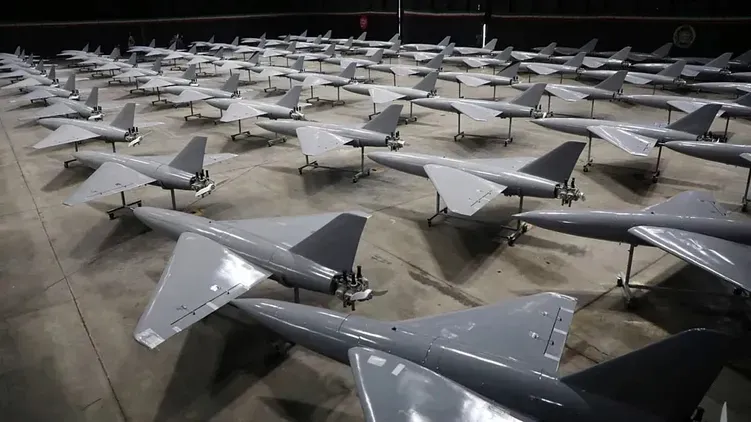
EghtesadOnline:The IRGC's drone strike on US positions in Bahrain marks its second retaliatory response to CENTCOM attacks in southern Iran. As tensions rise amid a diplomatic deadlock, the escalating confrontation could gradually pave the way for a new round of hostilities.
Political Desk: A US attack on communications infrastructure in the Sirik area of Hormozgan province prompted a military response from Iran's Islamic Revolutionary Guard Corps (IRGC). This marks the IRGC's second response to recent US strikes on radar systems and missile launchers in southern Iran, once again extending the geographical scope of the confrontation beyond Iran's borders.
Meanwhile, reports of explosions in Bahrain and Iranian officials' insistence that the country will not remain in a state of "neither war nor peace" point to the fragility of the ceasefire and the growing risk of renewed hostilities.
From Sirik to Bahrain
In a statement, the IRGC said it had targeted a US air defense radar system at the Riffa helicopter base in Bahrain with six drones. Explosions were reportedly heard in Bahrain, but as of publication, neither Bahraini nor US authorities had confirmed that the drones had struck the radar facilities.
Tensions between Iran and the United States have intensified as both countries remain in a fragile standoff following months of military confrontation. The IRGC's attack was a response to a US airstrike on a communications tower in the Sirik area of Hormozgan province, near the Strait of Hormuz. The incident could trigger a series of retaliatory strikes.
Iran's state news agency IRNA reported late Thursday that Sirik had come under US fire. Although no independent details were released regarding the extent of the damage or the precise targets, the IRGC described the attack as part of a broader pattern of US strikes and provocative actions in southern Iran.
Just hours after the report emerged, the IRGC announced that its Aerospace Force had targeted a US military early-warning radar system in Bahrain in retaliation for the American attack. The IRGC described the operation as a "serious warning" to Washington, adding that further responses would face no restrictions if US attacks continued or what Tehran described as American aerial provocations and oil smuggling in the Strait of Hormuz persisted.
However, Tehran and Washington offered conflicting accounts of the operation. US Central Command (CENTCOM) claimed it had intercepted and destroyed two Iranian suicide drones heading toward Bahrain, adding that the incident caused no damage or casualties.
That was not the end of the confrontation. The IRGC launched its second attack on Sunday morning.
Bahrain: A Strategic Pressure Point for the US Military
Bahrain's selection as the target of the IRGC's drone operation carries considerable military and political significance. The country hosts the US Navy's Fifth Fleet and serves as one of Washington's most important military deployment and coordination hubs in the Persian Gulf.
Early-warning radar systems are also a key component of air defense networks. They are designed to detect incoming missile and drone threats and give interception systems time to respond.
Through the attack, Iran is seeking to demonstrate that US military infrastructure across the region cannot be considered beyond the reach of potential Iranian strikes if attacks on Iranian territory continue.
What Are the Implications of Striking US Positions?
The most significant implication of the latest developments is the potential shift in the scale and geographical scope of the military confrontation between Iran and the United States. In recent months, much of the confrontation has revolved around attacks on infrastructure inside Iran, a naval blockade of Iranian ports and reciprocal threats. However, the strike on US military facilities in Bahrain suggests that Tehran has once again turned to a strategy of expanding the geographical reach of the costs of war.
The second major implication concerns energy security and maritime trade. In its statement, the IRGC cited not only US airstrikes but also what it described as oil smuggling through the Strait of Hormuz as grounds for its military response.
In this context, the strike on US military facilities in Bahrain cannot be separated from the broader dispute over the naval blockade of Iranian ports and restrictions on shipping through the Strait of Hormuz.
Washington is seeking to use economic and maritime pressure to constrain Tehran's ability to resist, while Iran is leveraging its geopolitical position to raise the costs of that strategy.
Will Iran Refuse to Remain in a State of Neither War nor Peace?
At the political level, remarks by Iranian Parliament Speaker Mohammad Bagher Ghalibaf also carried a message for Washington. He said Tehran was prepared for either negotiations or war, making any continuation of an agreement conditional on the United States accepting seven Iranian demands.
Ghalibaf also stressed that Iran would not remain in a state of "neither war nor peace," warning that if the United States made another mistake, Iran's armed forces would determine the geographical scope of the confrontation.
Meanwhile, a Wall Street Journal report, citing US intelligence officials, claims that Iran still possesses between 1,500 and 2,500 missiles in its arsenal. If accurate, the estimate could help explain why Washington continues to face a significant Iranian missile threat despite sustained military and economic pressure.
Renewed War or Pressure to Reach a Deal?
Taken together, the latest developments suggest that the ceasefire and relative halt in attacks between Iran and the United States have represented less a resolution of their differences than a period in which both sides have sought to rebuild capabilities and test each other's red lines.
Washington continues to rely on a naval blockade and economic pressure as its primary tools for containing Tehran. A faction within the White House, which appears to include US Secretary of State Marco Rubio, supports maintaining this strategy.
Iran, meanwhile, is seeking to raise the costs of that policy by demonstrating its missile and drone capabilities and threatening US military facilities across the region. Tehran has warned that it will not tolerate the current state of limbo indefinitely.
Nevertheless, it is still too early to conclude that both sides are heading toward a full-scale war. Rubio's recent remarks suggesting that a resumption of large-scale military operations against Iran is unnecessary, alongside ongoing diplomatic efforts mediated by Qatar and Pakistan, indicate that concerns over the costs of renewed war remain within Washington.
Under these circumstances, two scenarios appear particularly plausible. The first is the continuation of limited, reciprocal strikes aimed at maintaining deterrence and improving each side's bargaining position in negotiations. The second is a gradual escalation beyond the current level of confrontation, potentially leading to a new round of broader military attacks.
The more the prospects for diplomatic progress fade, the more likely the second scenario could become in the near future. This comes as a third US carrier strike group is expected to arrive in the Middle East within the next 36 hours.