


US Expands Pressure on Iran, Targets Land Trade Routes After Naval Blockade
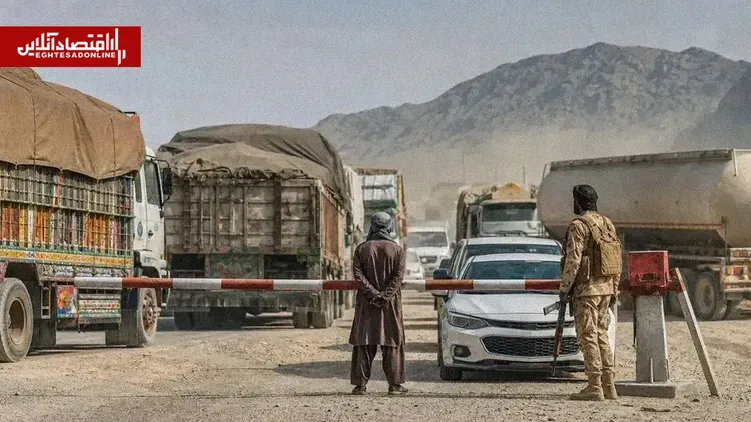
EghtesadOnline: From restricting oil exports to tightening controls over land borders and the Caspian Sea, Washington is expanding its economic and military pressure on Tehran.
The US military is stepping up its pressure campaign against Iran by establishing a new task force aimed at restricting the country's land trade routes and the movement of military-related equipment across its borders.
The new unit, known as Task Force Iron Gate, will focus on preventing the transfer of advanced weapons, sanctioned materials and dual-use technologies through Iran's land borders and the Caspian Sea. It will also seek to disrupt what Washington describes as illegal revenue streams linked to Tehran.
The move comes as the US naval blockade has already severely restricted Iran's oil exports. Washington is now seeking to close additional trade routes through which Iran continues to import military equipment and other essential goods.
US Establishes New Task Force to Monitor Iran's Borders
According to a Reuters report by Phil Stewart, the US military announced on Saturday, November 7, 2026, the establishment of a new task force called Task Force Iron Gate. First reported by Reuters, the unit will be based in Tampa, Florida, and will coordinate its activities with other US government agencies.
Its primary mission is to prevent the transfer of advanced weapons and other sanctioned goods across Iran's land borders and through the Caspian Sea. However, its mandate extends beyond military equipment to include blocking the flow of dual-use technologies and restricting revenue streams that Washington considers illegal.
A US military official, speaking on condition of anonymity, said the coordination effort is expected to involve the Treasury, State and Justice Departments, as well as the US intelligence community.
Admiral Brad Cooper, commander of US Central Command (CENTCOM), said in a statement that strengthening cooperation with other US government agencies would further limit Iran's ability to finance terrorism, rebuild weapons factories and replenish its military supplies.
Iran's Secret Network for Evading Sanctions
The establishment of the new task force comes after a Reuters investigation revealed that Iran had developed a secret network of military agencies to import equipment and supplies despite Western sanctions and the US naval blockade.
According to the investigation, Iran has imported at least $2 billion worth of hardware, explosives and heavy-duty trucks since January 2025.
The shipments have entered Iran through several routes, including cargo ships from Russia across the Caspian Sea, trucks traveling from Central Asian countries and freight aircraft from China.
These trade routes indicate that, despite maritime restrictions and Western sanctions, Iran has continued to use regional transportation networks to obtain some of its military and logistical supplies.
Washington is therefore seeking to expand its operations beyond maritime routes and tighten controls over land borders and other commercial channels.
US Naval Blockade Has Prevented More Than $25 Billion in Iranian Oil Exports
US Central Command estimates that its naval blockade has prevented Iran from exporting more than $25 billion worth of crude oil.
The restrictions come amid a war launched by the United States and Israel against Iran more than eight months ago. US military strikes have dealt severe blows to Iran's conventional military capabilities, while the naval blockade has significantly disrupted the country's crude oil exports through the Strait of Hormuz and the Arabian Sea.
Despite these measures, however, Iran continues to pose a considerable threat to the region. Meanwhile, the country's authorities have tightened their domestic grip on power.
Growing Doubts Over the War: Can Military Pressure Force Tehran to Back Down?
The expansion of US operations against Iran comes as the results of the US midterm elections have also reshaped the political landscape surrounding the conflict. The Democrats' victory and their takeover of Congress from the Republicans have increased domestic pressure on Donald Trump's administration.
Iran has also adopted a critical stance toward Washington following the midterm results, which dealt a major blow to Trump's Republican Party.
US Vice President JD Vance blamed the Iran war for the Republican electoral defeat and appeared to question whether the conflict had been worth its costs.
Meanwhile, mediators have intensified efforts in recent days to end the war between Iran and the United States, although concerns remain that fighting could resume after the midterm elections.
Trump has continued to threaten a new offensive against Iran, raising concerns among Gulf countries. Tehran has previously warned that any renewed attack could trigger a broad retaliation targeting regional infrastructure.
At the same time, Reuters has reported that US intelligence assessments in recent months have suggested that renewed strikes against Iran would not fundamentally change Tehran's negotiating position or lead to the collapse of the Iranian government.
Taken together, these developments suggest that Washington is seeking to expand its economic and commercial pressure on Iran alongside its military campaign. However, it remains unclear to what extent restricting land and maritime trade routes will weaken Tehran's economic and military capabilities.