


Oil Prices Fall Below $90 as LNG Tanker Traffic Through Strait of Hormuz Hits Wartime High
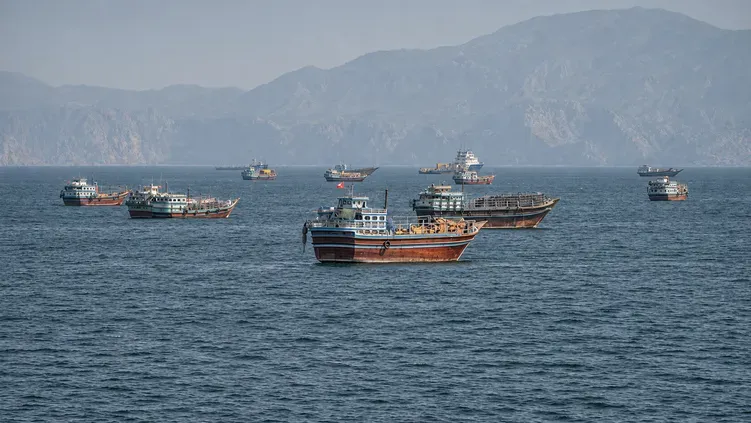
EghtesadOnline: Oil prices extended their decline on Tuesday as expectations of a further escalation in the Iran–US conflict eased, while rising OPEC production and improving energy exports from the Persian Gulf added to supply expectations. Brent crude fell below $90 a barrel for the first time since late August, while shipping data showed that monthly LNG tanker traffic through the Strait of Hormuz had reached its highest level since the outbreak of the war.
Global oil prices continued to decline on Tuesday, November 10, extending losses from the previous trading session. Remarks by US President Donald Trump indicating that he would refrain from launching further military strikes against Iran eased traders' concerns about a potential escalation that could disrupt oil supplies from the Middle East.
At the same time, increased oil production by OPEC members and a gradual recovery in energy exports from the Persian Gulf shifted market expectations towards stronger supply.
Brent crude fell below $90 a barrel on Tuesday for the first time since August 31. After briefly moving back above the $90 threshold, it stood at $90.18 a barrel at the time of reporting, down 2.58%.
US West Texas Intermediate (WTI) crude also declined 2.43% to $84.74 a barrel.
Brent had already closed Monday's session down 5.85%. The benchmark has now fallen approximately 23% from its six-month high of $118 a barrel, recorded on October 30.
The latest decline gathered momentum after Trump said on Monday that, following requests from regional countries, including Qatar's prime minister, he intended to refrain from launching new military strikes against Iran for the time being.
Tim Waterer, chief market analyst at KCM Trade, said traders were continuing to monitor Trump's more conciliatory tone towards Iran following the US midterm elections.
According to Waterer, although attacks on vessels around the Strait of Hormuz are continuing, their intensity has not increased sufficiently to impose a fresh geopolitical risk premium on oil prices.
Political developments are not the only factor weighing on the market. Physical oil markets have also experienced declining prices for Brent cargoes in recent weeks, increasing concerns about a potential return to a supply surplus.
JPMorgan estimates that the global oil market recorded a surplus of approximately 1.4 million barrels per day in October. Elevated oil prices have weighed on demand, while rising production has contributed to stronger supply.
According to a Reuters survey, OPEC oil production increased by 1.38 million barrels per day in October compared with September, reaching 22.87 million barrels per day. Saudi Arabia, Kuwait and Iraq accounted for the largest contributions to the increase.
Production among the 11 OPEC members has now recovered to approximately 90% of its pre-war level.
Taken together, these developments have weakened two of the main factors previously supporting oil prices: expectations of further military escalation and concerns about supply shortages.
LNG Tanker Traffic Through Strait of Hormuz Hits Highest Level Since War Began
While oil prices have been declining, the latest shipping data point to a significant increase in liquefied natural gas (LNG) exports through the Strait of Hormuz.
According to data from S&P Global Energy, 31 LNG carriers exited the Strait of Hormuz in October, compared with 23 in September. This represents an increase of approximately 35% and marks the highest monthly number of LNG tanker movements since the outbreak of the Iran–US war.
Of the 31 vessels, 23 had loaded their cargoes at Qatar's Ras Laffan facility, while eight had loaded at the UAE's Das Island terminal.
Eric Yap, a senior analyst at S&P Global Energy, said LNG tanker traffic from the UAE through the Strait of Hormuz had returned to pre-war levels. For Qatar, however, the figure remained slightly above 30% of its pre-war level.
Data from analytics firm Kpler also indicate increased activity at regional export terminals. The number of LNG cargoes loaded in October reached 42, compared with 27 in September.
Loading activity at Qatar's Ras Laffan terminal also reached its highest level since the beginning of the war, with 35 cargoes totalling more than 2.7 million tonnes.
By comparison, Qatar exported nearly 6.2 million tonnes of LNG in February, the month the war began.
Kpler data further show that some Qatari LNG cargoes were transferred between vessels near the coast of Oman after passing through the Strait of Hormuz. Their final destinations included markets such as South Korea and Pakistan.
The increase in LNG tanker traffic, alongside higher OPEC oil production, points to a gradual recovery in energy supply flows from the Persian Gulf. However, Qatar's export volumes remain significantly below pre-war levels.
Improving Supply Outlook Eases Pressure on Global Oil Markets
For oil markets, the significance of these developments lies in the changing outlook for global supply.
The reduced likelihood of further military escalation, combined with the recovery of part of the region's export capacity, has lowered concerns about a prolonged shortage of oil in international markets.
Nevertheless, continued attacks on vessels around the Strait of Hormuz remain a major source of uncertainty regarding the sustainability of this recovery.
As a result, although improving energy flows and rising production are putting downward pressure on prices, the stability of the global oil market remains closely tied to developments in the Persian Gulf and the security of shipping routes through the Strait of Hormuz./reuters