


Global Markets Open the Week Volatile as Gold Retreats From $4,200 and Oil Rebounds
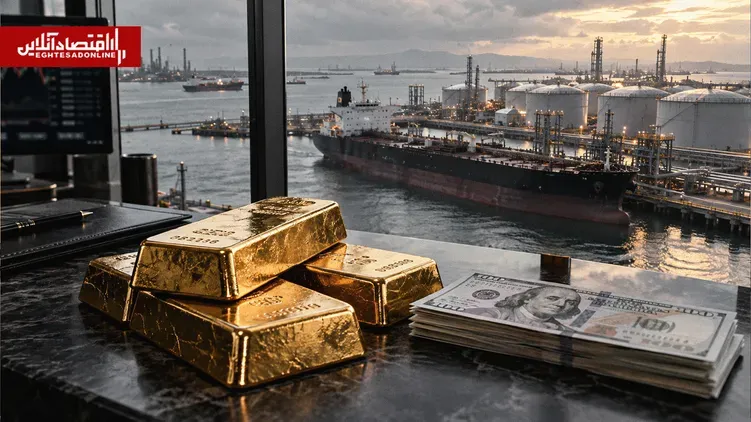
EghtesadOnline: Global markets began the week with volatile trading. Gold retreated after briefly climbing above $4,200 an ounce, while oil recovered much of its early-morning decline. Meanwhile, the release of US inflation data and the start of corporate earnings season have placed investors on the brink of a pivotal week.
Global markets opened the second week of October amid two political developments that have pushed energy-market expectations in opposite directions. Attacks on Riyadh airport and oil tankers in the region heightened concerns about potential disruptions to oil supplies. In contrast, Donald Trump’s pledge to halt attacks on Russian and Ukrainian energy infrastructure, along with the prospect of increased Russian diesel exports, raised hopes of easing fuel-price pressures.
The result was sharp volatility in oil prices during the first hours of trading, with fluctuations spilling over into metals and equity markets.
However, the main factor likely to determine the direction of markets for the rest of the week is US inflation and the Federal Reserve’s next policy decision. Minutes from the US central bank’s September meeting, released last Wednesday, showed that most policymakers considered another interest-rate increase before the end of the year necessary. Concerns about persistent energy-driven inflation and the impact of massive investments in artificial intelligence on economic demand have also played a role in the debate.
Investors are now waiting to see whether the latest inflation figures will confirm these concerns.
Gold: Rally Above $4,200 Fails to Hold
Gold began Monday’s session higher, climbing to around $4,210 an ounce in early trading. However, it failed to maintain its position above the $4,200 threshold and had retreated to approximately $4,177 by midday.
The initial decline in oil prices and bond yields helped support gold at the start of the session. Nevertheless, investor caution ahead of Wednesday’s release of US September inflation data limited the metal’s upward momentum.
The Wall Street Journal has also highlighted the difficulty gold has faced in establishing a foothold above $4,200. Wednesday’s inflation report is particularly important because a stronger-than-expected increase in consumer prices could reinforce expectations that the Federal Reserve will maintain a restrictive monetary policy, a development that typically weighs on gold.
Conversely, inflation below forecasts could ease pressure on bond yields and the dollar, potentially creating room for gold prices to recover.
Silver Retreats as Copper Takes a Different Path
Silver also surrendered part of its early gains alongside gold. After moving above $61 an ounce, the metal retreated to approximately $60.75.
Silver remains sensitive to expectations surrounding US interest rates, and any shift in the monetary-policy outlook could affect its price volatility.
Copper, however, moved in the opposite direction to precious metals. Copper futures on the COMEX exchange rose 0.61% to approximately $6.73 a pound.
Concerns about potential disruptions to mine production and hopes of stronger demand from China have supported copper prices.
Meanwhile, a recent Reuters report indicates that the possibility of tariffs on US imports of refined copper has drawn substantial volumes of the metal into American warehouses in recent months, widening the price gap between the New York and London markets.
Oil: From a Surge Following Riyadh Attacks to a Retreat After Trump’s Message
Oil experienced the most volatile start to the week among major commodities. Brent crude initially climbed to $105.63 a barrel before falling to $102.33 amid reports concerning Russian supply. It subsequently recovered much of its decline, rising to around $104.51 a barrel, although it remained 0.42% below its opening level.
US West Texas Intermediate crude also rebounded after touching a low of $89.61 a barrel, climbing to $91.49 and limiting its decline from the opening level to 0.37%.
According to Bloomberg, the attacks on Riyadh initially heightened market concerns about the security of infrastructure and energy transportation routes. However, the announcement of an agreement between Trump and Putin to facilitate Russian diesel exports, combined with the resumption of some previously halted production in the Gulf of Mexico, put renewed downward pressure on prices.
Meanwhile, Trump’s pledge of an energy ceasefire between Russia and Ukraine remains shrouded in uncertainty. Moscow has not confirmed the announced agreement, while Kyiv has said it is unaware of its details. Continued attacks on oil tankers in the region have also prevented supply concerns from fully subsiding.
Goldman Sachs has raised its forecast for Brent crude in December from $85 to $90 a barrel in its latest assessment. Nevertheless, the bank’s analysts continue to expect a gradual recovery in Middle Eastern supplies to ease some of the upward pressure on oil prices later this year.
Dollar Strengthens Again as Euro and Yen Remain Under Pressure
In currency markets, the dollar’s initial decline proved short-lived. The US Dollar Index (DXY) climbed to 102.316, while the euro slipped to $1.11910.
The dollar also strengthened against the Japanese yen, with the exchange rate reaching 158.438 yen per dollar, signaling continued pressure on Japan’s currency.
According to Reuters, escalating geopolitical risks in the Middle East, expectations ahead of the US inflation report, and France’s fiscal concerns have been among the main factors prompting caution among currency investors.
Wednesday’s inflation figures could provide a clearer indication of the dollar’s direction, particularly if the data alter market expectations about the timing of the next interest-rate increase.
Wall Street: Futures Edge Higher as Treasury Market Closes for Holiday
US equity futures posted modest gains ahead of Wall Street’s opening. According to a European market update from Reuters, futures on the S&P 500 and Nasdaq 100 were up approximately 0.3%.
The S&P 500 closed Friday’s session at 7,811.51, while the Nasdaq ended at 27,366.17. The US cash equity market is scheduled to open at 17:00 Tehran time on Monday.
Trading in US Treasury securities, however, is suspended for Columbus Day. At the close of Friday’s session, yields on two-year and 10-year Treasury notes stood at 4.80% and 5.24%, respectively.
Markets Still Bet on an October Rate Pause
Data from the FedWatch tool show that traders are pricing in an 81.2% probability that the Federal Reserve will leave interest rates unchanged at its October 28 meeting. The probability of a 25-basis-point rate increase stands at 18.8%.
For the December 9 meeting, the probability of interest rates ending up above their current range is approximately 84.8%.
The difference between expectations for the two meetings suggests that, despite the Federal Reserve’s concerns about inflation, markets expect policymakers to wait for additional economic data in October before potentially considering another rate increase in December.
Week Ahead: US Inflation and Corporate Earnings Put to the Test
This week’s economic calendar features several major events for investors. Earnings reports from major US banks begin on Tuesday, offering further insight into corporate profitability and the effects of elevated interest rates.
The week’s most important economic release, however, is scheduled for Wednesday, October 14, at 16:00 Tehran time.
Economists surveyed by Reuters expect the US Consumer Price Index (CPI) to rise 0.6% month over month in September and 3.7% year over year.
On Friday, October 16, Federal Reserve Chair Kevin Warsh is scheduled to speak with International Monetary Fund Managing Director Kristalina Georgieva at 07:00 Tehran time.
Global markets have begun the week reacting to political developments, but their direction in the coming days will depend largely on economic data. The US inflation report could reshape interest-rate expectations, while corporate earnings will show whether Wall Street can sustain its growth amid elevated financing costs.
Written by Danial Rahimi