


Iran’s Oil Minister Resigns Amid Deepening Export Crisis
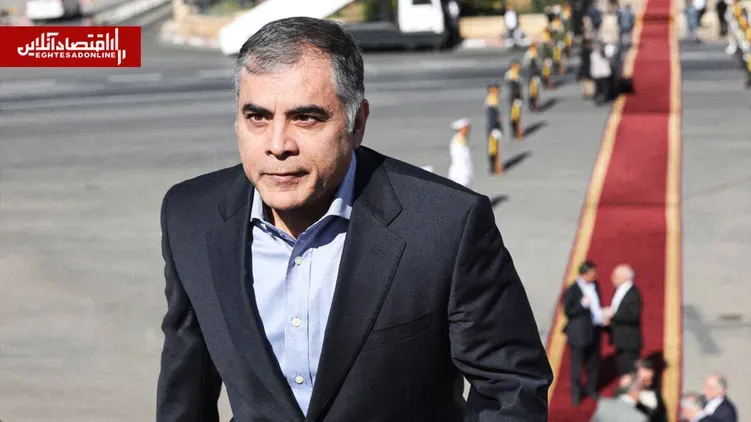
EconomyOnline: The government says Oil Minister Mohsen Paknejad resigned for personal reasons and that his resignation had been under consideration for some time. A review of recent developments and statements, however, suggests that the resignation was not sudden and may have been driven by multiple factors.
Political Desk: Mohsen Paknejad, Iran’s oil minister, has resigned during one of the most challenging periods for the country’s oil industry in recent decades. The government says the decision was motivated by personal reasons and had been under consideration for some time, but accounts circulating behind the scenes point to other possible explanations.
It remains unclear why President Masoud Pezeshkian accepted a resignation that, according to the official account, had been on the table for some time precisely when Iran’s oil exports had fallen close to zero. This raises the possibility that a combination of underlying factors contributed to the decision.
Was the Resignation Really Sudden?
The first point that may help explain the resignation is that, contrary to how the development initially appeared, Paknejad’s departure was not a one-day decision. The vice president said the oil minister had previously submitted his resignation. At the same time, rumors of his dismissal or resignation had circulated several times in recent months. In July, the Oil Ministry was forced to deny reports that Paknejad had resigned. In September, reports again emerged about a possible change in the oil ministry, which the ministry’s spokesperson described as “psychological warfare.”
A conservative media activist also claimed that the government had reached the conclusion more than a year ago that Paknejad should step down, and that the change was even expected to take place after Pezeshkian returned from New York. The government has not confirmed the claim, but if accurate, it would suggest that the current resignation may have marked the end of a prolonged dispute or internal process within the government.
Resignation Amid a Deepening Oil Export Crisis
The oil minister has left office during one of the most difficult periods for Iran’s oil industry since the 1979 revolution. Oil tanker-tracking data indicate that crude oil loadings from Iran effectively fell to zero in September. That compares with around 220,000 to 255,000 barrels per day in August, while volumes had been considerably higher in previous months. Reuters has also reported that the pressure from the blockade and sanctions has severely restricted Iran’s oil exports.
Bloomberg reported in early October that Iran’s oil exports had fallen to zero, while exports from other countries in the region had largely recovered through alternative routes.
This came despite Paknejad previously saying that Iran’s oil exports had not stopped for even a single day during the 40-day war. In his latest remarks, the outgoing minister also said that revenue from oil already sold was still being collected. Some Iranian oil had previously been moved out of the blockade zone in floating storage or cargoes in transit, with China remaining the main buyer. However, the U.S. Treasury secretary has claimed that Iran’s oil stored at sea will also soon run out.
Oil Intermediaries and Uncollected Revenues
Alongside the export crisis, the issue of selling oil through intermediaries, commonly referred to in Iran as “trustees” or tarashti, has also intensified political pressure on the Oil Ministry.
Parliament has in recent weeks pursued an investigation into the way oil is sold and payments are collected by the National Iranian Oil Company and its subsidiary NIOC International, known as NICO. One of the issues raised is the allocation of around 80 million barrels of oil to four intermediaries. According to published reports, more than 40 lawmakers have supported the issue.
Samsami, a Tehran lawmaker, has claimed that out of more than 86 million barrels of oil sold on credit and without guarantees, around 30 million barrels were transferred to final buyers, while the fate of more than 56 million barrels remains unclear. This is currently a claim raised in parliament and should not be treated as proof that oil was lost or that misconduct occurred.
The issue is significant for Paknejad because selling Iranian oil under sanctions is inherently difficult without intermediary networks. But as these networks become more extensive, questions over discounts, payment collection, transaction guarantees and transparency become increasingly sensitive.
Reports have also emerged of a meeting involving NICO’s managing director, Paknejad, former Economy Minister Abdolnaser Hemmati and Central Bank Governor Mohammad Reza Farzin over unreturned oil revenues. These accounts require verification through official documents and audits, but they indicate that the collection of oil revenues has been one of the Oil Ministry’s major challenges.
Disputes at the Management Level
Another layer of the resignation involves disputes within the management structure of Iran’s oil and petrochemical sectors. In recent months, reports emerged of disagreements between the management of Persian Gulf Petrochemical Industries Company and the oil minister. Media reports described friction between Paknejad and Mohammad Shariatmadari. Hassan Abbaszadeh was eventually appointed as the new head of Persian Gulf Petrochemical Industries Company, replacing Shariatmadari.
It was also reported that the cancellation of contracts with seven Chinese refineries by the managing director of NICO was not carried out with Paknejad’s approval. The possibility of disagreements between NICO and the four intermediaries should therefore also be considered among the potential factors behind Paknejad’s resignation.
Was There a Dispute With Pezeshkian?
The possibility of tensions between Paknejad and President Pezeshkian cannot be completely ruled out. In September, unofficial and unconfirmed reports emerged about an alleged argument between Paknejad and Pezeshkian during a cabinet meeting. As usual, the reports were denied.
Although no official evidence of a serious dispute between the president and the oil minister has been made public, it appears that Paknejad’s relationship with Masoud Pezeshkian was not entirely free of friction.
Four Possible Reasons for the Resignation
Ultimately, the available evidence and statements from government officials point to four possible explanations.
The first is that personal and individual reasons genuinely played the main role in the resignation. The second is that managerial pressures and disputes within the oil industry pushed Paknejad to the point of leaving office. The third possibility is that the controversy surrounding oil sales, intermediaries and the collection of revenues contributed to his decision to step down. Finally, it is possible that all of these factors, combined with the unprecedented crisis in oil exports, led the government to conclude that a change at the top of the Oil Ministry was necessary.
Whatever the reason, Paknejad took over the Oil Ministry after receiving 222 votes in parliament and is now leaving at a time when Iran’s oil sales are approaching zero.
Bord Takes Over as Caretaker
Following Paknejad’s resignation, Hamid Bord, the managing director of the National Iranian Oil Company, has taken over as caretaker of the Oil Ministry under an order from the president. He is a veteran oil industry manager and was appointed head of NIOC by Paknejad in 2024.
In his first remarks, Bord called for maximum production and the continuation of oil exports.
It remains unclear whether Bord will be the government’s choice for the permanent ministerial position. His appointment, however, at least indicates that the government’s immediate priority is operational stability at the Oil Ministry — the sector at the center of the U.S. sanctions and economic blockade against Iran.