


A Ceasefire in Limbo: Trump Announces Russia-Ukraine Energy Truce as Kyiv Awaits Details
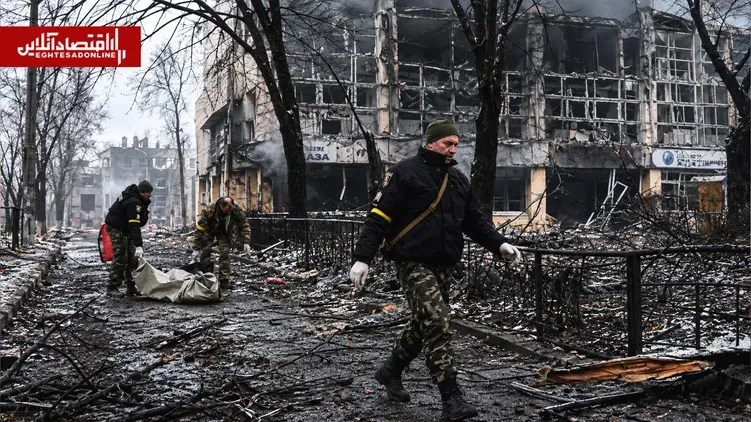
EghtesadOnline: Donald Trump has announced that Russia and Ukraine have agreed not to attack each other’s energy infrastructure. But Ukrainian President Volodymyr Zelensky says he learned of the arrangement through news reports, underscoring just how uncertain the proposed ceasefire remains.
Political Desk: Four years into the Russia-Ukraine war, there is still no clear path toward an end to the conflict. Donald Trump has announced an energy ceasefire between Russia and Ukraine, claiming it took effect immediately. However, statements by Ukrainian President Volodymyr Zelensky suggest that the details—and even the mechanism for implementing the agreement—remain unclear. Zelensky said he had not been informed of the arrangement and would agree to halt attacks on energy infrastructure only if Moscow also stopped its strikes.
These developments come as rising global fuel prices amid the US-Israeli war with Iran intensify political and economic pressure on the Trump administration, pushing Washington to seek a reduction in tensions on the Ukrainian front. However, continued Russian attacks, growing divisions between Washington and Kyiv, and US efforts to revive energy trade with Moscow have cast doubt on the prospects for success.
An Agreement in Limbo
In a post on his social media platform, Truth Social, Trump announced that Russia and Ukraine had agreed to an energy ceasefire. Without providing details about the scope of the agreement, its implementation timeline, or the mechanism for monitoring compliance, he wrote: “The Energy Ceasefire in the Russia/Ukraine War is in effect NOW. Both sides have agreed to it. Please do not violate it!”
Zelensky’s response, however, suggested that the US president’s announcement did not necessarily mean that a practical agreement endorsed by both parties had been reached. In an interview with Axios, the Ukrainian president said the arrangement was news to him but that Kyiv would be prepared to accept it if Trump had reached an agreement with Russian President Vladimir Putin.
In a separate statement, Zelensky reiterated that Ukraine supported an energy ceasefire but was waiting to receive details from the US side.
Meanwhile, at the time of the reports cited here, the Kremlin had not issued a clear response to Trump’s announcement. Ukrainian officials also reported continued Russian attacks on energy infrastructure, raising further questions about the credibility and enforceability of the announced ceasefire.
US-Ukraine Tensions Deepen
The ceasefire announcement followed several days of unusually sharp tensions between Trump and Zelensky. On Friday, the US president announced the lifting of restrictions on Russian diesel exports, a decision he justified as an effort to increase fuel supplies and lower prices in global markets and the United States.
According to explanations published about the arrangement, Russia is expected to supply more than 300,000 metric tons of diesel—equivalent to approximately 2.25 million barrels—to the US and global markets.
Zelensky described the decision as a weak move, warning that the revenue generated from fuel sales would give Moscow additional financial resources to continue the war with greater intensity. Trump, in turn, urged Ukraine to stop attacking Russian oil refineries and even raised the prospect of a change in leadership in Kyiv.
The central disagreement concerns the nature of attacks on energy infrastructure. Washington wants Ukraine to halt its long-range strikes on Russian oil facilities. In recent weeks, these attacks have damaged refineries, storage facilities, and other assets linked to Moscow’s war economy, providing Kyiv with an increasingly effective means of exerting pressure on Putin.
Ukraine therefore argues that halting these attacks without a reciprocal commitment from Russia would weaken its defensive capabilities and reduce its leverage in the conflict.
Zelensky has said Ukraine is prepared to stop attacking Russian refineries, provided Moscow also halts strikes on Ukraine’s electricity and energy infrastructure. He has also called for practical guarantees and punitive measures from Ukraine’s allies in the event of a violation.
Reports suggest that the United States has even raised the possibility of suspending intelligence-sharing with Ukraine and restricting arrangements for supplying the country with weapons as leverage to persuade Kyiv to stop attacking Russian energy facilities. Such measures could significantly undermine Ukraine’s ability to detect aerial threats and defend itself against Russian attacks.
From Energy Infrastructure to Residential Areas
While Trump has declared that the ceasefire is already in effect, reports from Ukraine indicate that Russian attacks have continued.
Zelensky said Russian forces carried out drone and aerial attacks throughout Sunday, including a strike on Thermal Power Plant No. 5 in Kharkiv, Ukraine’s second-largest city.
According to the Ukrainian president, the country’s electricity generation and transmission facilities were targeted more than 200 times in a single week. He also reported 17 additional attacks on oil and gas facilities.
Alongside the pressure on electricity and heating networks, these attacks increase the risk of a worsening energy crisis and leave civilians more vulnerable as the colder season approaches.
Reports have also indicated civilian casualties in Russian attacks. According to an initial report, Russian strikes on the city of Zaporizhzhia on Saturday killed 23 people, including four children. A five-story residential building in Sloviansk was also targeted.
Subsequent reports said that three people were killed in Kharkiv and another three in Ivano-Frankivsk during attacks on Sunday.
The continuation of these attacks, combined with the absence of clear details about the ceasefire, suggests that Washington’s political announcement has yet to translate into an agreement that can be independently verified.
Trump is seeking to halt Ukrainian attacks on Russian energy infrastructure while using the prospect of Russian energy exports to help contain the impact of the war with Iran on fuel markets. However, it remains far from clear that he can bring a four-year conflict to an end simply or through threats and pressure.
That uncertainty is particularly significant given Trump’s repeated claims during his presidential campaign that he could end the war quickly.