


How October 7 Reshaped the Middle East Three Years Later
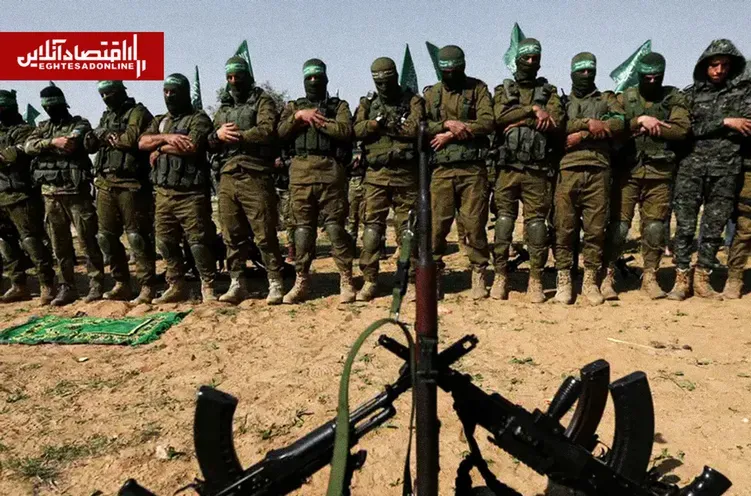
EghtesadOnline: Three years after the October 7 attack, a new order is taking shape in the Middle East — one that began with the Gaza war, spread to Lebanon and has now reached Iran.
Political Desk: Three years ago, on the morning of October 7, 2023, Hamas’s surprise attack on southern Israel initially represented one of the biggest intelligence and security failures in Israel’s history. But over time, it began to dismantle the regional order that had prevailed across the Middle East for years. The war that followed was initially supposed to end with the destruction of Hamas, but it gradually spread to Lebanon, Syria and Yemen before ultimately leading to direct confrontation between Iran, Israel and the United States.
Today, on the third anniversary of the attack, with Hamas having stepped away from governing Gaza and accepted disarmament, two competing interpretations of October 7 remain. One views the attack as a legitimate act of resistance, while the other argues that it ultimately contributed to the weakening of the so-called Axis of Resistance across the region. But did October 7 ultimately weaken the Axis of Resistance, or did it simply accelerate a confrontation that was bound to happen?
October 7 at First GlanceAt first glance, October 7 was a major security failure for Israel. Hamas managed to breach the Gaza barrier, attack Israeli communities and military bases, kill around 1,200 people and take 251 hostages. But the strategic significance of the attack lay in the fact that one of the world’s most heavily equipped militaries, despite its extensive intelligence network, was unable to prevent the assault or fully respond to its scale for hours.
There are still considerable questions and disputes over how much Israeli officials knew about the attack in advance. On the eve of the third anniversary of October 7, two U.S. newspapers, The Wall Street Journal and The New York Times, reported that the former head of Egypt’s intelligence service and the president of the United Arab Emirates had warned the Israeli prime minister about the attack shortly before it occurred. Netanyahu had even held a meeting with his security cabinet after those warnings, but did not raise the issue of an imminent Hamas attack.
Netanyahu’s office, however, denied the reports, avoiding the need to respond to the allegations. If the reports are accurate, however, they would suggest that October 7 became a security trap for Hamas. The attack gave Israel the opportunity to launch an unprecedented bombing campaign against Gaza, destroying large parts of the territory as well as its military and civilian infrastructure.
From Gaza to TehranIsrael launched the war after October 7 with the stated goals of destroying Hamas’s military capabilities and securing the release of the hostages. But the conflict quickly moved beyond Gaza. Hezbollah entered the confrontation one day after the attack, opening Israel’s northern front. Reciprocal attacks gradually escalated into a more comprehensive war in Lebanon, where Israel succeeded in targeting a significant part of Hezbollah’s military capabilities and leadership.
At the same time, Yemen’s Houthis disrupted global trade by attacking vessels linked to Israel in the Red Sea, while armed groups in Iraq and Syria also became part of the equation. As a result, what initially began as a war between Israel and Hamas evolved into a network of interconnected conflicts. The Council on Foreign Relations has described this transformation as the Middle East’s shift from proxy wars toward direct confrontations between states.
The larger turning point came in June 2025, when Israel attacked Iran for the first time. The war lasted 12 days and eventually ended in a ceasefire. That fragile truce ultimately gave way to a 40-day direct war between the United States and Israel on one side and Iran on the other in March 2026. Although that conflict also ended with a ceasefire, the truce remains fragile and the possibility of renewed hostilities persists.
In this sense, October 7 became directly linked to the war between Iran, Israel and the United States.
Did Israel Win?If military capability is the benchmark, the balance of power in the region has clearly shifted since October 7. Hamas has stepped away from governing Gaza and accepted disarmament; Hezbollah has suffered major losses and its infrastructure in southern Lebanon remains under attack; and the Iran-aligned government in Syria has fallen. The collapse of Bashar al-Assad’s government in Syria was one of the most significant developments, fundamentally altering Iran’s ability to transfer personnel and equipment to Hezbollah.
Yet Israel still faces questions over the future of Gaza, the political status of the Palestinians and its international legitimacy — legitimacy that has fallen to one of its lowest levels since the establishment of the Israeli state.
Even after the ceasefire and U.S.-backed political plans, reconstruction in Gaza has made very limited progress, while Hamas’s disarmament has not yet been fully implemented despite some claims to the contrary. Under these circumstances, the two-state solution has gained growing international support, although Israeli officials have so far rejected it.
Iran in the WarIn Iran, three years after October 7, a dual narrative has emerged. On one hand, Tehran has lost a significant part of its strategic depth. Hezbollah has been weakened, Syria has been lost and Hamas is now close to disarmament. As a result, Iran’s ability to use the so-called Axis of Resistance as a means of deterrence against Israel and the United States has come under serious pressure.
On the other hand, Iran has demonstrated that it still possesses capabilities and leverage that could alter the regional balance. The Houthis remain a significant player in the Red Sea and Bab al-Mandab, while the 40-day war demonstrated that even after sustained and heavy bombardment, Iran still retains missile and drone capabilities as well as regional tools of pressure.
Some recent assessments have even pointed to Iranian efforts to rebuild a network of allied forces across the region.
The Middle East Enters a New Phase of Regional ReorderingOctober 7 was expected to be a defining event, but instead it triggered a chain of developments across the Middle East. Gaza became linked to Lebanon, Lebanon to Iran, and Iran to the United States, as proxy wars increasingly gave way to direct confrontations.
At the same time, the 40-day war pushed Arab states even further toward the conclusion that regional security cannot be achieved through war. Some are now more actively seeking an end to hostilities, reconstruction and the creation of new regional security arrangements. Israel, meanwhile, has emerged from October 7 with the conclusion that its survival requires preparing for simultaneous conflict on multiple fronts.
The Middle East has therefore moved beyond the stage of simply managing crises after October 7 and entered a period of fundamental security reordering. That process could take years to unfold, and its eventual outcome may be determined by the trajectory of the U.S.-Israeli conflict with Iran. The consequences of these wars in Gaza, Lebanon and Iran, meanwhile, are likely to shape the region for years to come.