


Pentagon Prepares for Possible Renewed Strikes on Iran as US and Israeli Elections Loom
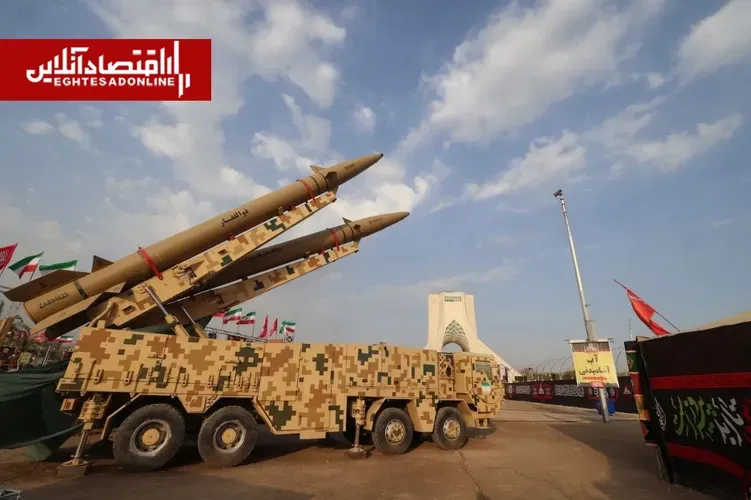
EghtesadOnline: With less than three weeks until Israel’s parliamentary election and less than a month until the US midterm elections, fresh signs point to the possibility of a renewed, large-scale military campaign against Iran. The Pentagon is preparing for a potential resumption of hostilities, nuclear negotiations remain deadlocked, and tensions over the Strait of Hormuz continue to mount. Tehran, meanwhile, has declared itself ready for what its foreign minister has described as an “apocalyptic war.”
The electoral calendars in the United States and Israel are becoming increasingly intertwined with the prospect of renewed war. Less than three weeks remain before Israel’s parliamentary election, while the US midterm elections are less than four weeks away. The developments come as negotiations between Tehran and Washington over ending the war have reached an impasse and the Pentagon prepares for the possibility of resuming major military operations against Iran.
US President Donald Trump has said that “constructive negotiations” with Iran are underway and that he will not attack the country before the elections. Behind the scenes, however, the picture appears less reassuring.
According to Axios, the US Department of Defense has instructed US Central Command (CENTCOM) to complete preparations for a possible resumption of major military operations against Iran. The directive reportedly sets no specific date for the start of any attacks, and Trump has yet to announce a final decision. Nevertheless, the order is significant because it suggests that the military option has moved beyond preliminary consideration and into operational planning.
At the same time, US Vice President JD Vance told Reuters that ending the war would require a meaningful reduction in Iran’s uranium-enrichment capacity. Secretary of State Marco Rubio has also said that Iran has missed opportunities to reach a nuclear agreement.
Tehran, however, maintains a fundamentally different position. A senior Iranian official told Reuters that recognition of Iran’s right to enrich uranium remains a red line for the country, adding that Washington’s demands remain far removed from Tehran’s own conditions.
Pentagon Steps Up Preparations for Possible Renewed Strikes
Following the deployment of additional military assets to the Middle East, reports that the Pentagon is preparing operational plans for a potential attack on Iran point to a possible new phase in the conflict.
According to sources cited by Axios, the directive does not establish a timetable for renewed strikes. The central question, however, is what targets a new military campaign might include, given that the United States and Israel already struck a broad range of military and some civilian targets across Iran during the 40-day war.
If operations resume, potential targets could include nuclear facilities, energy infrastructure and other strategic assets, according to reports. US and Israeli sources have also indicated that such operations could begin before the US midterm elections and potentially before Israel’s parliamentary vote.
The reports are consistent with developments in recent weeks. The United States has reportedly made dozens of additional aerial refueling aircraft available to Israel, while Trump has been considering options for expanding military operations against Iran.
Iranian officials, meanwhile, have also signaled their readiness for another round of fighting. Foreign Minister Abbas Araghchi previously said that Iran was prepared for an “apocalyptic war.” The secretary of Iran’s Supreme National Security Council has also warned of “new fronts” and “major surprises” in the event of an attack on the country.
Netanyahu Raises Prospect of an Attack Ahead of Israel’s Election
Israeli Prime Minister Benjamin Netanyahu has repeatedly raised the possibility of an attack against Israel in the run-up to the country’s election. He has claimed that there are indications that Israel’s “enemies” could launch an attack before voters go to the polls, although he has not specified which adversary he was referring to.
The remarks come as Israel prepares for its parliamentary election on November 27, with national security, the October 7 attacks three years ago and the Netanyahu government’s record remaining central issues in the political contest. The Associated Press has reported that Netanyahu’s right-wing coalition could lose its parliamentary majority.
Against this backdrop, any renewed military action or escalation involving Iran could rapidly reshape Israel’s domestic political environment.
An attack on Iran ahead of the US midterm elections on November 4, however, could carry significant political costs for Trump and the Republicans. Renewed hostilities could push energy prices higher and undermine Trump’s promises to avoid becoming embroiled in a prolonged war with Iran.
This creates the possibility of differences between Washington and Tel Aviv over the timing of any future military action, even if the two governments share broader strategic objectives.
Nuclear Dispute Leaves Negotiations at an Impasse
As military preparations become more prominent, developments on the diplomatic front offer little immediate cause for optimism.
In an interview with Reuters, Vance said that Tehran would need to make a meaningful reduction in its uranium-enrichment capacity to bring the war to an end. The US administration argues that if Iran has no intention of developing nuclear weapons, there is little justification for maintaining uranium enrichment at 60%.
A senior Iranian official who spoke to Reuters offered a contrasting position, saying Washington must first accept Tehran’s conditions and recognize Iran’s right to enrich uranium. According to the official, recognition of that right remains a red line for Iran.
Previous reports indicated that indirect negotiations had been underway over a phased agreement that would reopen the Strait of Hormuz and end the economic blockade. The two sides, however, remained divided over which should make the first concession.
Another major point of disagreement concerns the role of the strait in negotiations. Iran has sought to make the Strait of Hormuz a central element of any agreement, while Vance has explicitly described the issue as secondary, arguing that Iran’s nuclear program is the main concern. Trump has also emphasized the nuclear issue.
The Fate of Iran’s 440 Kilograms of Enriched Uranium
One of Washington’s principal reasons for maintaining pressure on Tehran is the status of Iran’s enriched uranium stockpile.
Iran is estimated to have approximately 440 kilograms of uranium enriched to 60%. In theory, further enrichment of that material could produce enough weapons-grade uranium for roughly 10 nuclear weapons. However, the precise amount of material remaining after the attacks, as well as the status of some Iranian nuclear facilities, remains uncertain.
For Washington, the lack of clarity surrounding Iran’s uranium stockpile and centrifuges means that the nuclear risk has not been eliminated.
Tehran, meanwhile, appears unlikely to abandon its enrichment position. From Iran’s perspective, military strikes against nuclear facilities and US demands for restrictions on enrichment do not necessarily mark the end of Washington’s demands. This makes a compromise over what Iran considers a fundamental right particularly difficult.
Strait of Hormuz: Two Competing Narratives
Beyond the nuclear dispute, the Strait of Hormuz remains another major source of tension.
Iran has said that the full reopening of the strait is conditional on the fulfillment of demands raised during negotiations. On October 10, Brent crude traded at around [Brent price to be confirmed] per barrel, while West Texas Intermediate (WTI) was trading at approximately $89.94 per barrel. The market movement came amid mounting concerns over attacks on oil tankers and disruptions to energy export routes.
Maritime monitoring reports suggest that the volume of oil passing through the Strait of Hormuz has approached pre-war levels. This indicates that the United States and its allies have managed to establish routes for energy shipments to move through the region despite the conflict.
However, the extent to which these flows can be sustained remains a key question as security risks and political tensions persist.
Could Iran Launch a Pre-emptive Strike?
The possibility of an Iranian pre-emptive strike has also entered the debate.
The naval and aerial blockade, combined with intensifying sanctions, is placing growing pressure on Iran’s economy. Washington is also reportedly seeking to expand the pressure through a land-based containment strategy involving Pakistan, Turkey and Iran’s neighboring countries.
Under these circumstances, time could increasingly work against Tehran. Senior Iranian officials have previously warned that a naval and aerial blockade constitutes an act of war and could trigger a military response.
If Iran concludes that an agreement with Washington is no longer attainable and that an attack is likely after the elections, it could consider launching a pre-emptive strike.
Such a move could affect the political climate in the United States ahead of the midterm elections while also seeking to disrupt the element of surprise in any future US-Israeli military operation.
However, whether Tehran would consider such a course of action remains uncertain. The possibility should be understood as a scenario rather than an established decision or an indication that an attack is imminent.
What Happens Next?
The risk of renewed large-scale military operations against Iran appears to have increased, alongside the possibility of a pre-emptive Iranian response.
Three developments stand out: the Pentagon is completing military preparations; negotiations over Iran’s nuclear program and the sequencing of reciprocal commitments have encountered serious obstacles; and the approaching elections in Israel and the United States have become an increasingly important factor in the crisis.
Taken together, these developments suggest that the period between October 27 and November 4 could prove particularly consequential. If no major escalation occurs during that period, the outcome of the US midterm elections could have a significant bearing on Trump’s subsequent decisions.
For now, the signals point to a diplomatic window that remains open but is narrowing as military preparations intensify. The prospect of renewed hostilities is becoming more prominent, even as neither side has publicly confirmed a final decision to resume full-scale war.
Written by Amir Mohammad Hosseini