


Iran’s Hormuz leverage tested as Trump rejects seven-day reopening plan
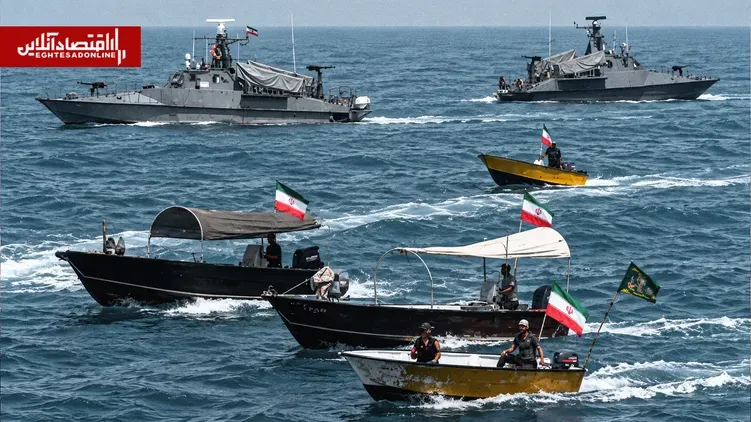
Has the Strait of Hormuz lost its deterrence? Why did Donald Trump reject Iran’s proposal to reopen the Strait of Hormuz for seven days in exchange for lifting the naval blockade? This report examines these questions.
Political Group: The Strait of Hormuz has become the main arena of confrontation between Iran and the United States since the beginning of the war. Now, about seven months after the war began, Iran continues to view the strait as leverage in the war and negotiations, while the United States is seeking to demonstrate that Iran can no longer stop the flow of oil.
Following Donald Trump’s rejection of Iran’s proposal to reopen the Strait of Hormuz for seven days in exchange for lifting the naval blockade, the question has once again returned to the center of the dispute: Has the effectiveness and deterrence of the Strait of Hormuz declined compared with the past?
The US Narrative Versus Iran
The United States says it has managed to maintain the flow of oil shipments from the Persian Gulf by escorting commercial vessels through the southern route of the Strait of Hormuz. Trump also claimed on Sunday that more than 20 million barrels of oil had passed through the strait in a single day and that US forces were facilitating the process. US sources have also reported that dozens of oil tankers have passed under US protection.
But oil prices in global markets tell a different story from the US narrative. Oil prices have once again approached $108 per barrel, prompting a response from Mohammad-Bagher Ghalibaf, the head of Iran’s negotiating team and speaker of parliament. He questioned the US account of control over the strait, saying that either the oil price is lying or US officials are. Axios also reported that US officials told Iranian negotiators that Tehran does not control the strait. However, the same report noted that the volume of oil passing through the waterway remains below pre-war levels.
Of course, oil prices alone cannot measure the extent of Iran’s or the United States’ military control over the Strait of Hormuz. Oil prices are also affected by factors such as attacks on oil infrastructure, pipeline capacity, insurance costs and geopolitical risk. But the key point is that the market still considers disruption in the Strait of Hormuz a real risk to global supply. If the strait had come under full US control, the market would have been expected to react much less strongly to Iran’s rejected proposal to reopen it.
A Warning Raised Two Months Ago
However, the data show that the passage of ships has not completely stopped, as it did during the war. At the same time, the naval blockade of Iran has caused the country’s oil exports to be cut off. This means that the United States has also closed the Strait of Hormuz to Iran. In effect, this is the scenario that some analysts had warned about months earlier.
Kourosh Ahmadi, a former Iranian diplomat, told EghtesadOnline that using the Strait of Hormuz is not a permanent advantage, and that countries are searching for alternative routes. He said Iran should use this leverage before it loses its value.
The key point is that the more countries anticipate the possibility of repeated disruptions in the Strait of Hormuz, the greater their incentive to invest in alternative routes. In the long term, this could reduce the strategic importance of the waterway.
Does the Strait of Hormuz Have Alternatives?
The Strait of Hormuz still has no complete and straightforward alternative. Reuters, in a report on alternative routes, has shown that Saudi Arabia’s East-West Pipeline, the Habshan-Fujairah pipeline in the UAE and some routes in Iraq can move part of the oil outside the Strait of Hormuz. However, none of them alone has the capacity and flexibility required to fully replace the waterway.
Alternative routes are also vulnerable. The recent attack on Saudi Arabia’s East-West Pipeline showed that transferring risk from the sea to land-based infrastructure does not mean eliminating the risk. After alternative routes were damaged, Saudi Arabia was forced to send part of its exports through the Strait of Hormuz again. The Wall Street Journal has also reported that Saudi Arabia’s efforts to bypass the strait have faced security and infrastructure challenges, forcing the country to rely on the waterway again.
What Happens Next?
Despite these developments, Iran continues to seek to make the Strait of Hormuz part of the negotiating equation, while the United States wants to separate the issue from the negotiating table and tie the talks to nuclear concessions and broader issues. Trump has rejected Iran’s proposal, although he has simultaneously said that he expects further negotiations to take place this week.
As a result, the Strait of Hormuz remains a lever for Iran, but one whose value depends on the behavior of the other side and whose circumstances have changed compared with previous months. The more ships that are able to pass under US escort, the more pipelines that become operational, and the more countries in the region invest in alternative routes, the greater the cost of using this leverage becomes.
Nevertheless, oil prices at around $107 a barrel show that this leverage has not yet become ineffective.