


A New Arms Race? How Wars Are Reshaping Global Military Spending
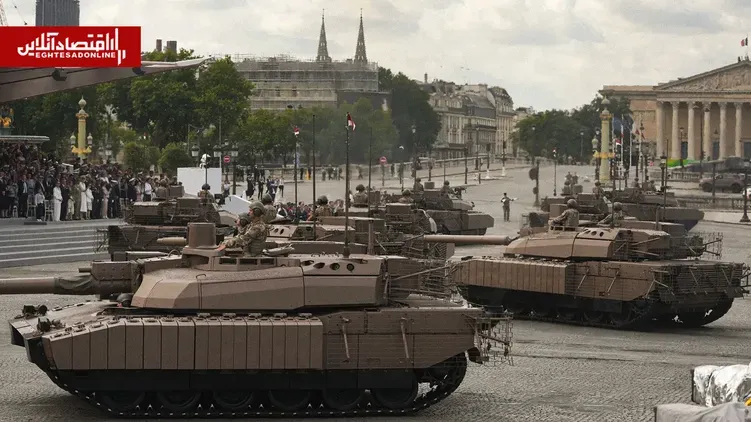
EconomyOnline: European, Asian and Middle Eastern countries have placed increases in military spending on their agendas as security tensions intensify. The structure of countries’ defense spending has been shaped by the “Russia-Ukraine war,” the “China-U.S. trade war,” and the “Iran-U.S.-Israel war.”
World Economy; Developments around the world have prompted countries to place greater focus on their military budgets, with growth in military spending being directed simultaneously toward weapons, air and missile defense, ammunition, and the development of defense industries.
An examination of countries’ defense budgets indicates that global security competition has entered a new phase. The pattern of these budgets in 2026 shows that the security trajectories of different regions have diverged, but converge around a common priority: preparing for costly and prolonged wars. From rebuilding ammunition stockpiles in Europe to developing missiles and air-defense systems in Asia and the Middle East, the experience of recent conflicts has directly affected how countries allocate military spending.
Europe; The Security Question
The most important relationship visible in European data is between countries’ geographic distance from Russia and the intensity of their security concerns. Germany, France and Poland are all NATO members, and all three support Ukraine and the strengthening of Europe’s defense capabilities.
Poland is located at the closest point to NATO’s eastern flank. Germany, at the center of Europe and as one of the continent’s largest economies, has taken on the role of a pillar of European defense, while France is seeking to preserve its independent military and nuclear capabilities. Data from the European Central Bank also indicates that countries that perceive the Russian threat as geographically closer have a stronger incentive to increase defense spending.
At the same time, the European Union has announced that defense spending by EU member states will rise from around €418 billion in 2025 to approximately €454 billion in 2026, representing an 8.6 percent increase in one year and roughly a 75 percent increase compared with 2021. The share of defense investment will also rise from 32 percent of defense spending in 2025 to around 36 percent in 2026.
These figures indicate that Europe is building new military capacity.
Poland; The Clearest Example of the Link Between the Budget and the Russian Threat
Poland can be considered the clearest example among the countries in the table. Because of its geographic position, its border with Belarus and its proximity to the Russia-Ukraine war zone, Poland perceives the Russian threat very directly. As a result, the increase in Polish spending is focused on equipment suited to a ground-based, multidimensional war in Eastern Europe.
This is also connected to Warsaw’s position on Ukraine. Poland supports Ukraine’s integration into Western structures because, from Warsaw’s security perspective, creating a buffer zone and strengthening Ukraine’s defensive capabilities could be linked to the security of Europe’s eastern flank. For this reason, the war in Ukraine forms part of Poland’s national-security calculations.
If the Russia-Ukraine war continues, it is unlikely that Warsaw will return to its pre-war level of military spending, as a significant part of Poland’s current defense policy is based on the assumption that Russia will remain a long-term threat to European security.
Germany; Reducing Europe’s Dependence on the United States
Germany has concluded that its military is not sufficiently equipped to fulfill the role expected of it within NATO. The increase in defense spending is focused on ammunition, heavy equipment, air defense, fighter aircraft and expanding industrial capacity, with the aim of rebuilding military capabilities that were reduced after the Cold War.
Berlin is moving toward becoming one of the main pillars of Europe’s defense capabilities, particularly as European countries seek to reduce their security dependence on the United States. NATO’s new target of increasing members’ defense and security spending to 5 percent of GDP by 2035 is also reinforcing this trend.
France; Preserving the Capabilities of an Independent Military Power
Paris, given its nuclear status and military presence in various regions, is seeking to maintain the ability to conduct operations across different crises. France is a nuclear power, a permanent member of the UN Security Council and has military interests in various parts of the world; therefore, its armed forces must retain the ability to operate across a broad range of scenarios.
The focus on ammunition, long-range missiles, air power, nuclear deterrence and new military technologies indicates that France is increasingly preparing for what military terminology describes as high-intensity warfare.
Is Europe Preparing for War with Russia?
Based on the available evidence, Russia is the main driver behind the increase in Europe’s defense capabilities. A new report by the European Defence Agency in September 2026 warned that despite an unprecedented increase in defense spending, Europe still faces capability gaps in areas such as air and missile defense, ground forces, naval forces, drones and ammunition stockpiles, and that it needs to accelerate investment to achieve defense readiness by 2030.
This may be the most important document for analyzing the future, as it shows that Europe is still not prepared for a full-scale war.
As a result, if the current trend continues, a significant share of European defense budgets in the coming years will likely continue to be allocated to ammunition, air defense, missiles, drones, artillery and infrastructure.
East Asia | China and North Korea Are Major Threats
In East Asia, the three countries in the table—China, Japan and South Korea—operate within a shared security environment, but each approaches it from a different perspective. The International Institute for Strategic Studies (IISS) estimates that defense spending in Asia will reach approximately $630 billion in 2026. According to the institute, the expansion of China’s military power, U.S. pressure on its allies to increase defense spending, and the threat posed by North Korea are among the key factors driving the increase in military spending in the region, which faces the North Korean threat primarily in the form of nuclear and missile capabilities.
China; Increasing the Budget for a Long-Term Competition
China’s official defense budget for 2026 has reached approximately 1.94 trillion yuan, representing a 6.9 percent increase compared with the previous year’s actual expenditure. Beijing considers this increase part of the modernization of its armed forces and the strengthening of the country’s strategic capabilities.
China is simultaneously strengthening its navy, long-range missiles, air force, space capabilities, cyber capabilities and electronic warfare capabilities.
Beijing’s main focus is on the ability to confront a major power and control China’s surrounding strategic environment.
The Impact of the Iran War Extends Beyond Israel
One of the most important outcomes of this comparison is that the effects have not been limited to the budgets of countries directly involved in the conflicts. The United States is also facing the need to replenish its stocks amid increased consumption of ammunition and equipment during the war involving Iran.
Reuters reported on September 28 that the Pentagon had awarded RTX a multiyear contract worth potentially $20.7 billion to increase production of AMRAAM missiles, with concerns over declining U.S. missile stocks due to the war in the Middle East and military assistance to Ukraine among the factors behind the decision.
As a result, pressure on the U.S. defense industry could continue in the coming years, even if the intensity of one of the wars declines.