


From Saudi Airports to the Bab el-Mandeb Strait: How Yemen’s Houthis Could Reshape the Regional War
EghtesadOnline: Yemen’s war is increasingly threatening critical energy infrastructure, airports and maritime trade routes beyond its borders. With tensions between Iran and the United States also threatening to escalate, the conflict could open a new front in the regional war, stretching from the Persian Gulf to the Red Sea.
Recent attacks attributed to Yemen’s Houthi movement on Saudi Arabia’s civilian infrastructure highlight the changing dynamics of the conflict. When the Saudi- and Emirati-led coalition launched its military campaign against Yemen in 2016, the Houthis faced sustained aerial bombardment. Now, however, missile and drone attacks are threatening Saudi Arabia’s strategic infrastructure.
On October 11 and 12, attacks on King Khalid International Airport in Riyadh reportedly left 13 people dead and more than 300 injured in one incident, while another killed one person and injured 11. The attacks disrupted airport operations, forcing a temporary suspension of activity.
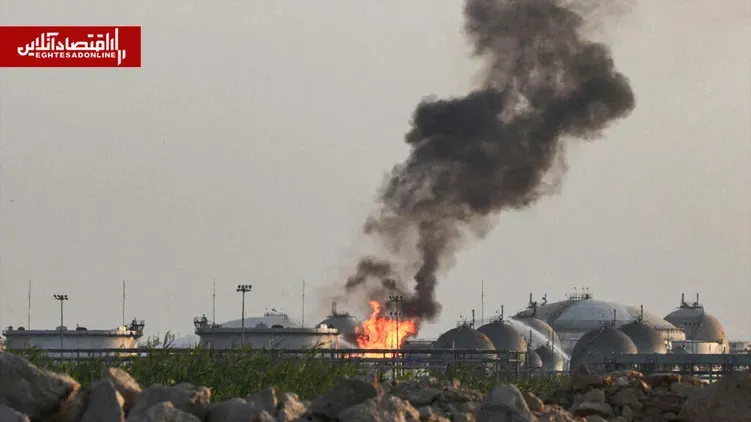
Saudi Arabia’s energy infrastructure has also been targeted. The East-West Pipeline, a critical route that allows the kingdom to transport crude oil to the Red Sea while bypassing the Strait of Hormuz, was previously hit and temporarily taken out of service.
Saudi Arabia is therefore facing mounting challenges in protecting its critical infrastructure, air routes and position as a regional economic hub.
The Bab el-Mandeb Strait: A Second Pressure Point Alongside Hormuz
Yemen’s strategic importance stems largely from its geographical position. The Bab el-Mandeb Strait connects the Red Sea to the Gulf of Aden and serves as a major maritime corridor for trade between Asia and Europe. Disruptions to shipping through the strait can affect traffic bound for the Suez Canal, forcing shipping companies to divert vessels around the Cape of Good Hope, adding time and cost to voyages.
The strait takes on added significance amid the conflict involving Iran and the United States. While the Strait of Hormuz is a key pressure point for energy exports from the Persian Gulf, the Bab el-Mandeb Strait could serve as a complementary source of economic and military pressure if Houthi attacks disrupt maritime traffic.
Saudi Arabia, which relies partly on the Red Sea coast to maintain its oil export capacity when shipping through Hormuz is threatened, would also be vulnerable to further disruption.
Will the United States Join the War in Yemen?
Saudi Arabia has relied on foreign military and intelligence support in its efforts to push back the Houthis. Yet the experience of previous years suggests that air superiority alone is not enough to eliminate the group’s missile and drone capabilities.
In 2025, the United States conducted an extensive bombing campaign against Yemen lasting approximately 50 days. The airstrikes, however, failed to eliminate the Houthis’ missile and drone capabilities. The dispersal of military infrastructure, positions in mountainous terrain and ability to preserve part of their weapons arsenal have made sustained military operations against the group difficult.
Following the renewed outbreak of fighting in July, the United States reportedly rejected a Saudi request to intervene directly in the war. President Donald Trump has since said that Washington is considering joining Saudi operations against the Houthis following the latest attacks.
Any renewed US campaign against Houthi positions, however, could increase the risk of retaliation against American forces and Washington’s regional allies.
Will Yemen Become Part of the Iran-US War?
If the United States and Israel resume attacks on Iran, Yemen’s Houthis could expand their operations against Israeli targets, Saudi infrastructure and shipping in the Red Sea, opening another front against Washington and its regional partners.
In such a scenario, the United States could be forced to divide its military resources among confronting Iran, protecting its forces in the Persian Gulf and defending regional allies.
However, the Houthis are not directly subordinate to Iran’s Islamic Republic. Tehran maintains political, military and arms-related ties with the group, but the Houthis also have domestic roots and independent strategic calculations.
A wider conflict involving Yemen is therefore possible, but the degree of coordination between Houthi operations and Iran’s military actions would depend on developments on the ground and the decisions of the parties involved.
Why Has the War Flared Up Again?
After four years of relative calm under a ceasefire, fighting in Yemen resumed in July following a Saudi attack on Sana’a airport, according to the account of events outlined in the report. The Houthis subsequently resumed missile attacks against Saudi Arabia.
The confrontation then expanded beyond sporadic cross-border strikes, reaching the Red Sea coast and areas near the strategically important Bab el-Mandeb Strait.
In September, forces aligned with Yemen’s internationally recognized government launched an operation to retake coastal areas with Saudi air support. Reports indicate that Saudi aircraft participated extensively in the campaign, which also benefited from US intelligence support.
Reclaiming coastal territory, however, remains a difficult task. Anti-Houthi forces comprise groups with differing political interests, while divisions between factions aligned with the internationally recognized government and southern forces have hindered the formation of a unified front.
Meanwhile, Houthi advances have continued, and the group is reportedly nearing control of the strategic city of Taiz.
A New Front in the Regional War
Developments in Yemen suggest that the conflict is approaching a critical juncture. Saudi Arabia and its allies are seeking to seize territory in western Yemen and push the Houthis away from the Red Sea coast. The Houthis, meanwhile, have maintained positions in strategically important coastal areas and are seeking to extend the conflict deeper into Saudi territory.
Washington now faces a difficult strategic question: whether defending its Saudi ally would require opening another front in an already expanding regional war.
If the United States and Israel resume attacks on Iran, Yemen could become an important factor in determining the conflict’s geographical reach and economic and military costs. The Houthis have demonstrated a capacity to threaten Saudi interests, Israeli targets and international shipping routes simultaneously.
The extent to which these threats translate into a coordinated regional campaign will depend on the decisions of the Houthis, Iran, the United States and their respective allies.