


What Do Diplomatic Gifts Really Say About International Relations?
EghtesadOnline: A diplomatic gift can be as monumental as the Statue of Liberty or as small as a pager capable of being linked to a deadly operation. Behind these objects, there is sometimes an effort to bring two countries closer—and sometimes a message that becomes more newsworthy than the meeting itself.
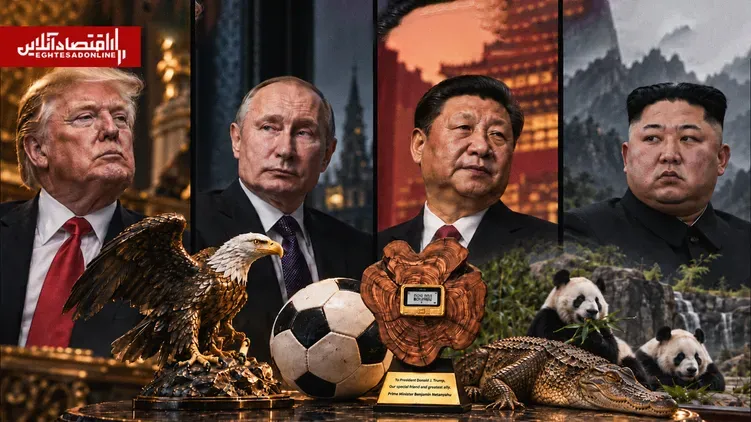
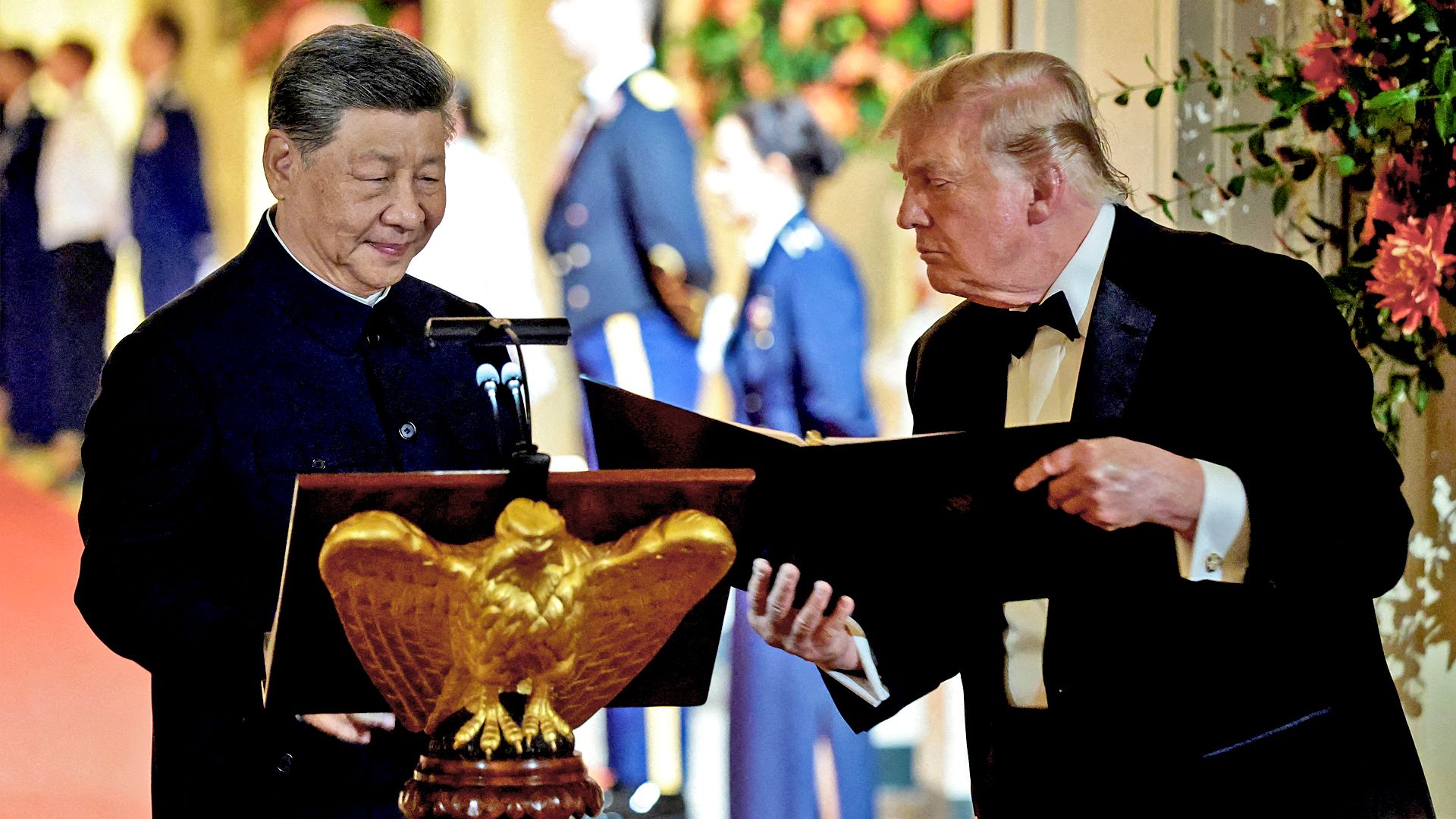
Political Desk:During Donald Trump and Xi Jinping’s recent meeting at the White House, the U.S. president presented the Chinese president and his wife with a custom-made sculpture of a bald eagle. Xi, meanwhile, announced that two pandas, Pingping and Fushuang, would soon be sent to the Atlanta Zoo. The pandas are not personal gifts to Trump; rather, they are part of an agreement on panda conservation and research and are expected to live at the zoo and be available for visitors to see.
The choice of an eagle and pandas was not accidental. Each country put forward a gift featuring an animal closely associated with its national image. Yet the history of diplomacy is full of gifts whose fate became stranger than the day they were presented.
A Gift the Size of an Island
France’s best-known gift to the United States could not possibly fit inside a box: the Statue of Liberty. The statue, officially named Liberty Enlightening the World, was intended to be completed in time for the centennial of U.S. independence in 1876, but it was ultimately inaugurated a decade later. France financed the construction of the statue, while the United States paid for its pedestal, making it a joint project between the two countries from the beginning.
The Musée d’Orsay in Paris is also holding an exhibition this year marking the 140th anniversary of the statue’s inauguration, featuring works by its creator, Frédéric Auguste Bartholdi.
The Statue of Liberty was intended to make the friendship between France and the United States enduring—a goal whose eventual scale its designers could hardly have imagined. Today, the statue itself is far more famous than the names of those who first proposed the idea.
A Panda-for-Bison Exchange
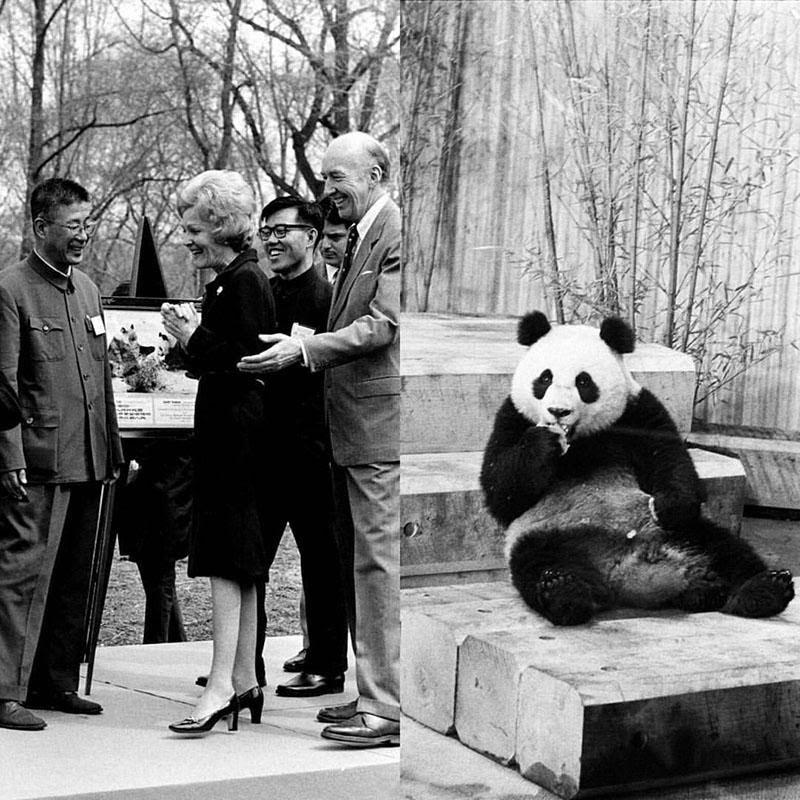
In 1972, following Richard Nixon’s historic visit to Beijing, China gave two pandas to the American people. The United States, in return, sent two musk oxen named Milton and Matilda to the Chinese people.
The pandas were housed at the National Zoo in Washington and became one of the best-known symbols of improving relations between the two countries. The announcement of new pandas being sent to Atlanta recalls that history, although modern panda arrangements should not be treated as identical to the 1972 gift.
North Korea once used food to reach out to its neighbor to the south, too—on an unusual scale. In 2018, Kim Jong Un sent two tonnes of pine mushrooms. The South Korean government said the mushrooms would be distributed among around 4,000 members of families separated by the Korean War, giving each person nearly half a kilogram.
In this case, the gift went beyond the leaders themselves and was directly connected to one of the most painful issues shared by the two countries.
A Waiter Crocodile in a North Korean Museum
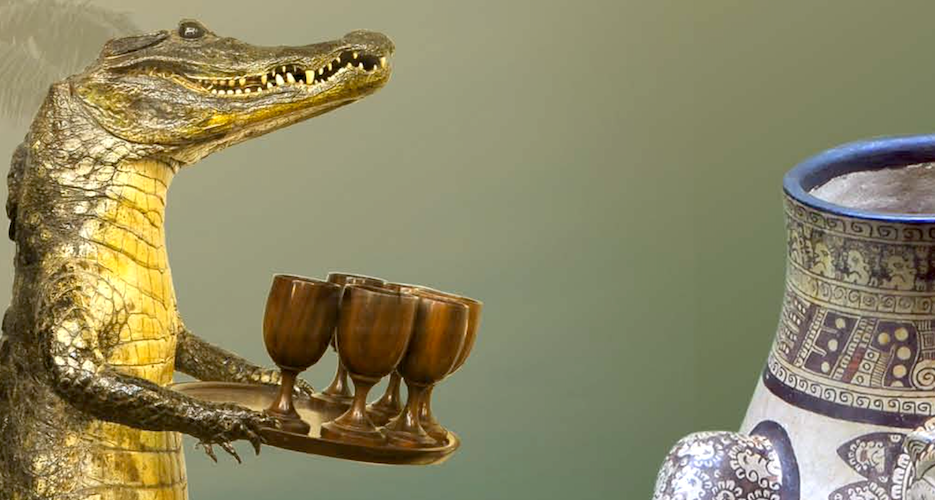
At North Korea’s museum of gifts to its leaders, there is an object that is more surreal than ceremonial: a taxidermied crocodile holding a drinks tray.
A delegation of Sandinistas from Nicaragua gave it to Kim Il Sung in 1982. The bizarre shape of the gift attracts attention, but the identity of the giver also matters; the object reflects the political relationship between two allied movements during the Cold War.
Living gifts have not always fit easily into formal diplomatic protocol, either. In 2016, Vladimir Putin gave Bahrain’s king a purebred Akhal-Teke horse and received a Damascus steel sword in return. In 2024, he also gave Kim Jong Un a Russian Aurus luxury car; Kim presented Putin with two native Pungsan dogs during the same period.
But the camel given to François Hollande did not have a happy ending. During the French president’s visit to Mali in 2013, residents of Timbuktu gave him a camel in gratitude for France’s military operation. The camel remained with a local family, and it was later reported that the family had killed and eaten it. Malian officials promised to provide a replacement; reports reviewed document the promise, but not the confirmed delivery of a second camel.
From an Iranian Bus to a French Glass Heart
Iranian presidents have also received and given diplomatic gifts whose fates have been unusual.
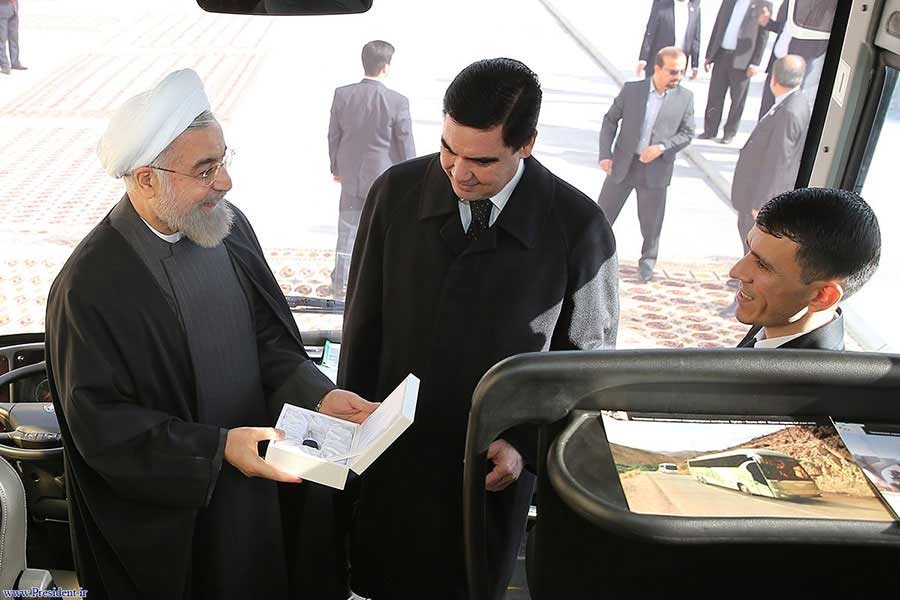
In March 2015, during Hassan Rouhani’s visit to Turkmenistan, he presented Gurbanguly Berdimuhamedow, then president of Turkmenistan, with a VIP Scania bus manufactured by Iran’s Oghab Afshan company. The gift was presented on the sidelines of a joint business meeting and was intended to showcase Iran’s industrial capabilities.
But Rouhani’s gift eventually ended up somewhere far removed from a presidential garage: it was given to a center for orphaned children. A few weeks later, Berdimuhamedow donated the bus to a children’s complex in Ashgabat, which at the time housed 254 children. The handover ceremony was attended by Turkmen officials and Iran’s deputy ambassador.
One of the more unusual gifts received by an Iranian president was neither an industrial product nor an expensive object, but a red glass heart.
Valéry Giscard d’Estaing, the former president of France, gave the heart to Mohammad Khatami. The keepsake became part of Khatami’s presidential gift collection, alongside jewelry, watches and other presents from foreign leaders.
Khatami also transferred other gifts to the museum, including jewelry that Prince Abdullah, then crown prince of Saudi Arabia, had given to his wife. The French glass heart was not comparable in monetary value with many other pieces in the collection, but its shape made it stand out among the official gifts.
A Bell Named Trump and a Button Lost in Translation
A good gift sometimes works not because it is expensive, but because it connects directly to the recipient. During King Charles III’s visit to Washington in April 2026, he presented Donald Trump with the main bell from the British submarine HMS Trump. The submarine’s name turned a historic object into a personal keepsake—and a natural subject for the cameras.
Sometimes, however, an attempt to create a symbol produces an unintended result.
In 2009, Hillary Clinton gave Russian Foreign Minister Sergei Lavrov a large red button intended to symbolize a “reset” in relations between Washington and Moscow. But the Russian word printed on it did not mean “reset”; it carried a meaning closer to “overload.” The translation error turned the button itself into the story instead of the intended message about closer relations.
Another common mistake when recounting diplomatic gifts is getting the recipient’s name wrong. The giant grasshopper-shaped wine cooler presented by French President Georges Pompidou in 1972 was, according to the Royal Collection’s archive, a gift to Prince Philip—not Queen Elizabeth II.
When a Gift Becomes a Controversy
Not every gift is guaranteed to produce a smile.
In 2025, Benjamin Netanyahu gave Trump a gold pager, a gift that the Israeli prime minister’s office linked to the pager explosions in Lebanon. The operation killed dozens of people and wounded thousands, making the gift a controversial subject because of its association with the attacks.
Qatar’s gift became controversial for a different reason: a Boeing 747 that the U.S. Defense Department accepted in 2025 for possible use as a presidential aircraft. The plane was transferred to the U.S. government rather than to Trump personally. Its acceptance sparked debate over the costs of preparing the aircraft, security considerations and the rules governing gifts from foreign governments.
In the end, perhaps no gift better illustrates the gap between appearance and reality than the wooden plaque given to the United States in Moscow. Soviet schoolchildren presented it to the U.S. ambassador in 1945. The plaque remained hanging in the ambassador’s office for years, until a hidden listening device was discovered inside it in 1952.
The people who gave it were not politicians, and the recipient was not a president. Yet the gift became one of the most enduring episodes in the history of diplomatic espionage.
From the Statue of Liberty to a red button, choosing a gift is part of designing a political encounter: what it should say about the country giving it, what it should mean to the recipient, and what people should think when they see it.
The fate of a gift, however, does not always remain in the hands of its giver. Sometimes a translation error, a camel—or the hidden contents of a wooden plaque—creates an entirely different story.