


US Midterm Elections: How Is Billionaire Money Reshaping the Political Race?
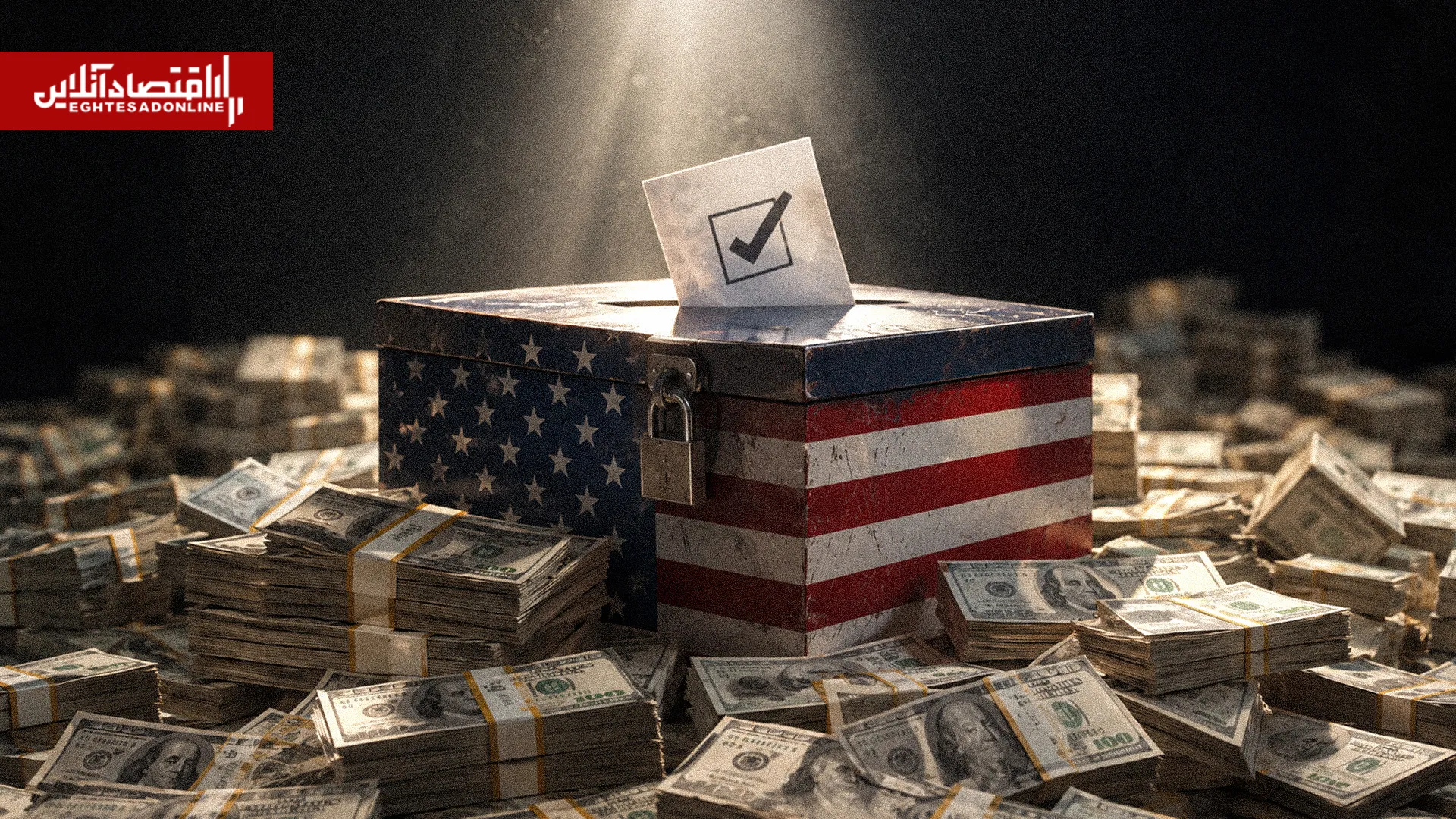
EghtesadOnline: The 2026 US midterm elections are on track to become the most expensive in the country's history, as billionaires, technology giants and companies operating in the cryptocurrency and artificial intelligence sectors pour billions of dollars into political campaigns, exerting greater influence than ever over Washington's political landscape.
Political Desk: The upcoming US midterm elections are setting a new record for campaign spending. Estimates suggest total spending in the 2026 election cycle will reach approximately $11.9 billion, surpassing even the $11.2 billion spent during the 2024 presidential election.
But the issue goes beyond rising campaign costs. An increasingly large share of election funding is flowing through channels that make it difficult to identify the original donors. As a result, determining exactly who is spending billions of dollars to influence political contests has become increasingly challenging.
A Guardian report highlights how the structure of US campaign finance is changing, from the growing influence of technology billionaires to the unprecedented concentration of political funding in the hands of a small number of individuals and companies. The rise of figures such as Elon Musk, alongside the growing involvement of industries such as artificial intelligence and cryptocurrency, is reshaping the traditional rules of party financing.
Record-Breaking Campaign Spending: Republicans Receive Three Times as Much as Democrats
According to projections by AdImpact, political advertising spending during the 2026 election cycle is expected to reach $11.6 billion, exceeding the $11.2 billion spent on advertising during the 2024 presidential election. Meanwhile, the nonpartisan organization OpenSecrets, which tracks money in US politics, estimates that total spending on this year's midterm elections will reach $11.9 billion.
A recent analysis by the Brennan Center for Justice found that the 40 largest donors had contributed more than $2.4 billion by mid-October. Adjusted for inflation, that figure is seven times the amount contributed by the 40 largest donors during the 2014 election cycle.
However, the key difference lies not only in the volume of contributions but also in their political direction. In 2014, the 40 largest donors gave Democrats twice as much as they gave Republicans. This year, however, their contributions to Republicans have been three times those made to Democrats.
Spending by Super PACs had also exceeded $2 billion by the end of September, a figure 51% higher in inflation-adjusted terms than during the previous midterm election cycle.
Meanwhile, The New York Times estimates that so-called "dark money" groups had spent at least $1 billion on the elections by the end of August.
Dark money refers to political funding provided through organizations that are not required to disclose the identities of their donors. These include certain nonprofit organizations classified under Section 501(c)(4) of the US tax code. Although their primary purpose is legally not supposed to be political activity, these restrictions are not always effectively enforced.
According to the Brennan Center, dark money groups account for 29% of the funding attributed to the 40 largest donors, with approximately $699 million of these contributions remaining largely untraceable.
From Elon Musk to George Soros: Who Are the Billionaire Donors?
One of the most significant developments in this year's elections is the growing influence of individuals using their personal fortunes to inject enormous sums into political campaigns.
Elon Musk, Tesla's founder and the world's richest person, has spent $483 million on the midterm elections so far. That is twice the amount George Soros contributed to Democrats during the 2022 election cycle.
Musk has particularly focused on helping Republicans retain control of the Senate, prioritizing the closely contested Senate race in Texas. His business empire and personal wealth have also been affected by his close ties to Ken Paxton, the Republican candidate.
However, Musk is far from the only influential figure in the race.
George Soros is among the few major donors who primarily support Democrats. On the Republican side, Wall Street investor Jeff Yass and the Uihlein family, owners of major shipping and packaging company Uline, have long been prominent financial backers of the party.
The two groups have focused on promoting school choice and supporting far-right political movements, respectively. Their combined contributions to the 2026 election cycle have reached at least $260 million.
Marc Andreessen and Ben Horowitz, prominent investors and figures in the artificial intelligence industry, are also among the major donors. Their contributions are largely aimed at reducing government regulation, expanding the cryptocurrency industry and electing candidates supportive of artificial intelligence.
Meanwhile, Miriam Adelson, an American-Israeli businesswoman, has contributed $67 million during this election cycle. She supports right-wing and pro-Israel policies in the United States and is considered an influential figure in shaping Donald Trump's approach to Israel.
Changing Laws and New Industries: The Rules of the Game Are Shifting
One of the main factors behind the growing influence of large political contributions has been changes to the US campaign finance system.
In 2010, a landmark Supreme Court ruling in the Citizens United case transformed the landscape of political funding. The decision allowed corporations and labor unions to spend unlimited amounts on independent political and election-related activities.
Alongside this development, a new Supreme Court decision in June also allowed political parties to spend larger sums in coordination with the candidates they support.
Before the ruling, national party committees faced spending limits on coordinated expenditures with Senate candidates ranging, depending on the circumstances, from $130,600 to $4,071,800. For House candidates, the limits ranged from $65,300 to $130,600.
The Supreme Court subsequently struck down these limits. As a result, Republican committees were able to raise more than $48 million in additional funding, while Democrats added only $4 million to their resources.
The change is particularly significant in smaller but potentially decisive races, where Democrats had previously enjoyed an advantage because of their stronger ability to attract small-dollar donations from local supporters.
At the same time, the industries exerting influence over elections have changed considerably over the past decade.
In 2014, labor unions, which have traditionally supported Democrats, accounted for 14% of the 40 largest donors in the midterm elections. This year, they no longer appear even among the top 40 donors.
The influence of traditional financial institutions has also declined. The financial sector accounted for nearly half of the 40 largest donors in 2014, but its share has fallen to 15% this year.
By contrast, newer industries such as cryptocurrency and artificial intelligence, along with the billionaires associated with them, are claiming a growing share of election funding. Even the real estate industry, historically a major financial backer of both parties, has become less significant in relative terms compared with these emerging sources of political money.
Another notable development is the increase in contributions made simultaneously to both parties. The share of donors giving money to both Republicans and Democrats during this election cycle is more than 100 times the level recorded in the 2018 and 2022 elections.
These bipartisan contributions have largely come from individuals and groups involved in cryptocurrency, online gambling, artificial intelligence and pro-Israel advocacy. Their combined contributions to both parties are roughly equivalent to the funding provided by donors who exclusively support Democrats.
Billions in Political Advertising: Can Money Actually Change Election Results?
Despite unprecedented levels of spending, it remains unclear how much this enormous financial investment has influenced voters' decisions.
Some polls suggest that waves of negative advertising by Republicans in Senate races across Alaska, Georgia, Maine, Michigan, North Carolina, Ohio and Texas have failed to produce any significant changes in voter support.
Meanwhile, Democrats appear to be in a position to regain control of the House of Representatives and potentially even the Senate, despite Republicans outspending them in some contests.
Determining the precise spending gap between the two parties remains difficult, as the figures are constantly changing.
For example, former New York City Mayor Michael Bloomberg contributed an additional $36 million to Democratic candidates on Friday, on top of an earlier commitment of $80 million.
Nevertheless, estimates continue to point to a substantial Republican advantage in spending on Senate races and a narrower lead in House contests.
Beyond traditional political advertising, another form of financial influence is gaining ground: payments to political influencers on social media platforms.
Such payments are rarely transparently recorded or disclosed. Campaigns and political committees can channel money to influencers through intermediary companies, while influencers themselves are not legally required to tell their audiences that they have been paid to support a particular candidate.
Ian Vandewalker of the Brennan Center views the growing use of these payments as a warning sign for future elections.
According to Vandewalker, the United States once had a political finance system built around restrictions and transparency, but those safeguards are gradually being weakened.
He points to the emergence of wealthy industries such as artificial intelligence and cryptocurrency, which are using substantial political contributions to both parties to push for reduced or eliminated government oversight and regulation. This trend, he argues, is likely to intensify in the years ahead.
Vandewalker also believes that the enormous sums spent by individuals such as Musk increasingly resemble commercial investments rather than purely political contributions.
He warns that as the 2028 presidential election approaches, politicians may become even more dependent on one or a handful of extremely wealthy donors.
In a democratic system, every individual is supposed to have one vote. But as the political influence of wealthy individuals grows, equality within the political system becomes increasingly difficult to maintain./Gurdian