


titanium grade 2 in France: which material certificates should you request?
When purchasing titanium Grade 2 in France, requesting the right material certificates is essential to verify product compliance, quality and batch traceability. Buyers should know which inspection documents to request and how to ensure that each delivered product remains linked to its original production records.
"titanium grade 2 in France" should be ordered with documentation that connects the delivered material to the agreed product specification. A generic certificate carrying the supplier’s name is not enough if the actual batch cannot be identified. When reviewing titanium grade 2 in France through Alloy360, state the product form, dimensions and documentation requirement before the quotation is accepted.
The same discipline applies when comparing a titanium grade 2 manufacturer in Italy with other suppliers. A country description does not establish the origin of a particular batch, the seller’s manufacturing role or its suitability for a regulated application. Ask who produced the material and which records will accompany the actual delivery.
When evaluating a titanium grade 2 manufacturer in the UK, consider whether the available product forms, dimensions and processing options match your project requirements. Confirming these details before ordering can help reduce additional machining needs, avoid compatibility issues and keep the procurement process on schedule.
Specify the product before asking for a certificate
Grade 2 is a material designation, not a complete purchasing instruction. A sheet, bar and tube can require different product specifications and inspection details. Add the dimensions, tolerances and any application-specific requirements to the request. The supplier should confirm the agreed specification rather than substitute a general brochure about titanium properties.
Commercially pure titanium should not be confused with every titanium alloy sold under the same broad category. Likewise, a material grade alone does not qualify a finished component for medical, aerospace or pressure service. Those applications may involve additional controls. Start with the approved engineering requirements for the job and ask the supplier to respond to them explicitly.
Buying titanium grade 2 in France with traceable records
Material traceability means that the delivered product can be connected to the relevant production and inspection records. Ask how the material will be marked and how that identity will be retained after cutting. A certificate can be perfectly readable yet offer little practical value if several unmarked pieces arrive together without a reliable way to identify their source batch.
The heat number or another agreed batch reference should be consistent across the records that use it. Do not assume that every order line represents one heat. If material comes from multiple heats, ask how the delivery and certificates distinguish them. Keep this question in the order rather than trying to reconstruct the answer after machining begins.
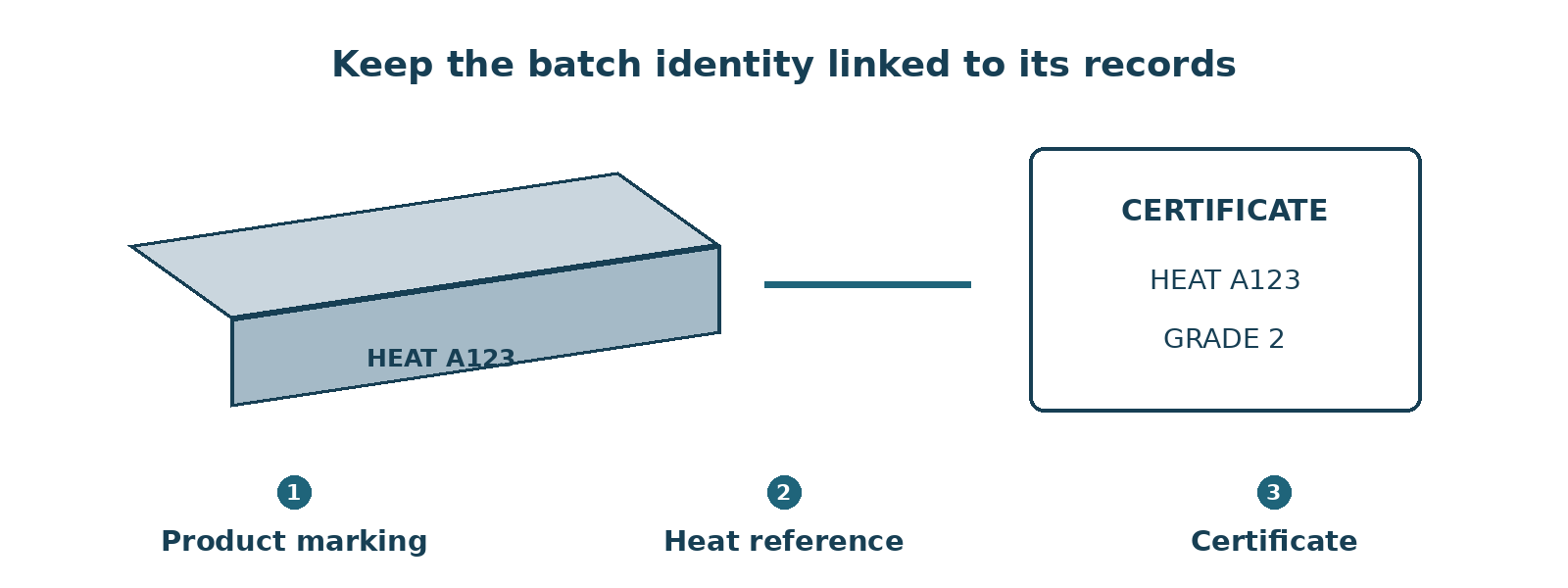
Educational traceability diagram connecting a marked titanium bar, a heat reference and its material inspection certificate
Match each document to its purpose
| Document | What it helps establish | What to check |
| Purchase specification | Agreed requirements | Product form and revision |
| Inspection certificate | Reported inspection results | Link to the supplied batch |
| Delivery record | data-x-Items received | Quantity and identification |
| Cutting record | Identity after processing | Parent batch and piece labels |
The names of documents are not interchangeable. A declaration of conformity and a certificate with specific test results can serve different purposes. Where an inspection document such as EN 10204 type 3.1 is required, write that requirement into the order and have the supplier confirm it. Do not assume every stock item automatically includes the same documentation package.
Receiving titanium grade 2 in France without losing identity
Check the delivery before removing markings or separating pieces. Compare the product description, dimensions and identifying references with the purchase order. Photograph the labels and retain the packaging information where it helps trace the batch. If a piece is unmarked, ask for clarification before it is mixed with accepted material in the workshop.
When material is cut, the internal handling process matters. A bar with one visible reference can become several pieces without labels. Agree how identity will be transferred before cutting takes place. The method should suit the application and avoid damaging the material. Purchasing a certificate does not replace the receiver’s responsibility to maintain the link afterward.
Read the results against the agreed requirement
Check that the report identifies the correct material and product form. Review the reported chemical and mechanical information against the specification used for the order. If a value or test is missing, request an explanation rather than assuming that a blank means compliance. The engineering or quality team should decide whether the evidence meets the intended requirement.
Avoid inventing one universal checklist of acceptance values for all Grade 2 products. The relevant limits and tests depend on the applicable specification and its revision. A copied online table may omit product-specific conditions. Use the contractual requirement and recognised technical documents, then ask the supplier to explain any deviation in writing before acceptance.
Questions worth including in the enquiry are:
· Which specification and revision will the material meet?
· What inspection document is included in the quoted price?
· How will each heat or batch be identified at delivery?
· Can traceability be retained if the supplier cuts the stock?
A workable purchasing sequence
1. Obtain the engineering requirement for the application.
2. Define the product form, dimensions and documentation package.
3. Have the supplier confirm the requirements in its quotation.
4. Inspect the delivered identity and records before processing.
5. Keep the accepted documents with the internal material record for future review and audits.
Consider paperwork costs before comparing prices
A quotation that includes cutting, marking and inspection records is not directly comparable with a bare stock price. Ask whether document charges apply per product, dimension or batch. Some suppliers have specific rules for requesting certificates after an order. Confirm those arrangements before purchase instead of assuming that a missing record can always be supplied later.
Delivery terms also deserve attention. Clarify who handles transport damage, missing identification and documentation discrepancies. Agree on the point at which the material can be processed. Starting production before resolving a record mismatch may make a simple return more difficult and can mix the cost of machining with the original purchasing dispute.
What documentation issue has delayed your material approval? Share a non-confidential example in the comments and ask the supplier how it maintains traceability for your requested product form.