


NewYork Times: Iran prepares for another round of war despite diplomatic efforts
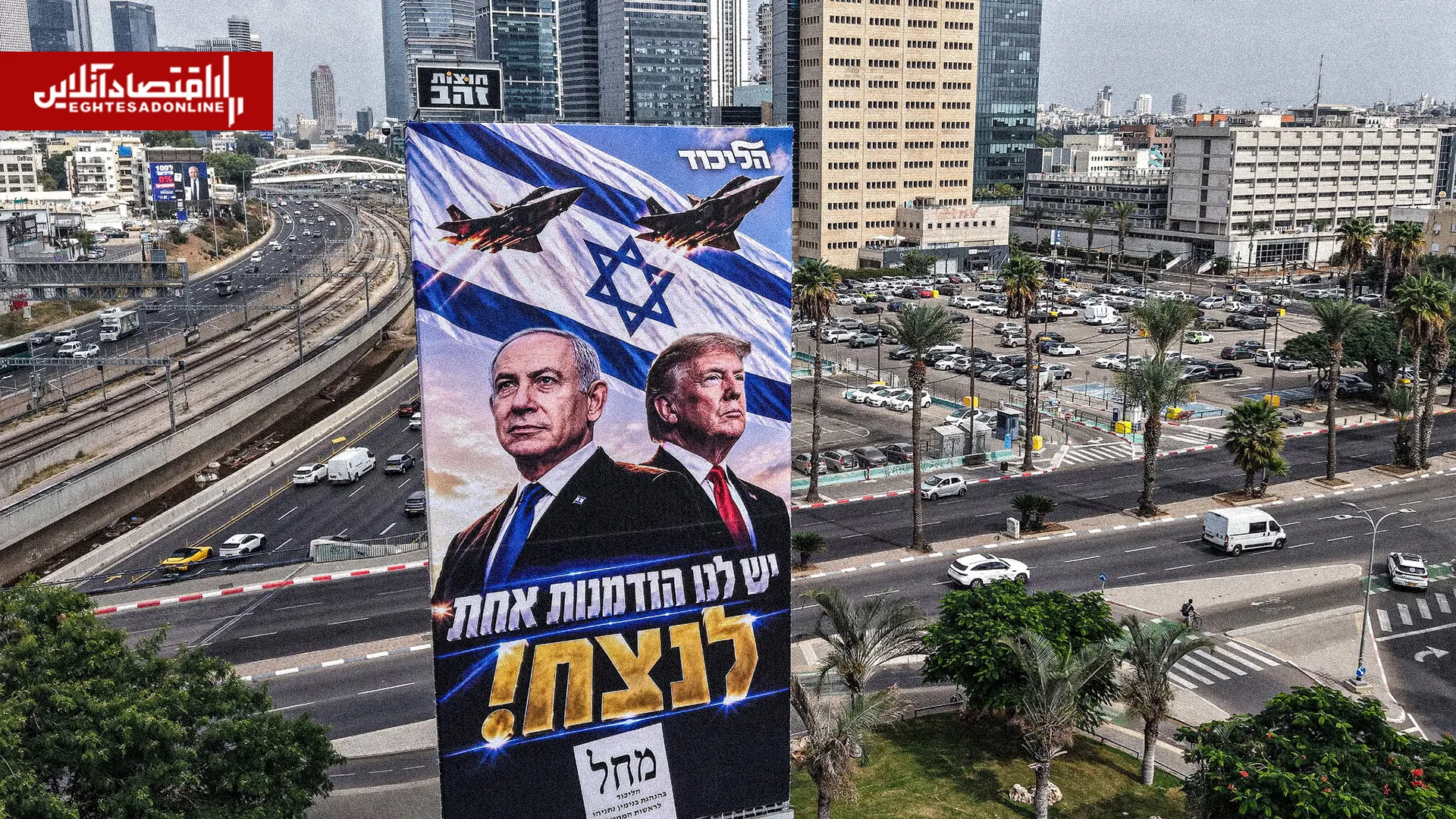
EghtesadOnline: Iran is preparing for the possibility of renewed military confrontation with the United States and Israel, despite recent diplomatic initiatives aimed at reaching an agreement with Washington. Tehran believes that neither a change of government in Israel nor political shifts in the US Congress would necessarily ease regional tensions.
Israel’s general election has produced no clear winner, leaving neither the far-right coalition led by Benjamin Netanyahu nor the main opposition bloc led by former senior military official Gadi Eisenkot with enough support to form a government independently. The outcome has plunged the country into weeks of political uncertainty.
Analysts say Iran would welcome Netanyahu’s departure from power. Netanyahu played a central role in persuading US President Donald Trump to launch strikes against Iran earlier this year and had sought to organize another round of airstrikes against the country ahead of the election.
However, Mohammad Saleh Sedghian, director of the Tehran-based Arab and Iranian Studies Center, believes Iranian leaders see a possible change of prime minister as having only a short-term impact, rather than fundamentally altering Israeli policy.
“Iranian and Israeli policies toward each other have remained consistent, regardless of which government has been in power in Israel since the 1980s,” he said. Any potential change, he added, would most likely be temporary rather than strategic.
Hamidreza Azizi, a senior Iran analyst at the International Crisis Group, also cautioned against expecting a fundamental shift in hostility between the two countries.
Even if Eisenkot or another opposition leader takes power and shifts Israel's approach from full-scale warfare toward renewed covert operations against Iran, Tehran could still respond with escalation, he said.
According to Azizi, Iran's strategic thinking has undergone a significant shift, primarily characterized by a greater willingness to take risks and a departure from its longstanding policy of “strategic patience.”
As a result, Iran may now be prepared to launch direct military action even in response to covert Israeli operations.
US midterm elections could give Tehran greater leverage
In the United States, Democrats are heading into next week's midterm elections with a strong chance of capturing at least the House of Representatives. However, the scale of their victory, and whether they can also secure control of the Senate, will determine how effectively they can constrain Trump's policies, including his approach to the war with Iran.
Iranian leaders are well aware that the economic costs of the war, particularly rising gasoline prices for American consumers, have affected Trump's popularity and the Republican Party's electoral prospects.
Tehran appears to believe that reaching an agreement with Iran could offer Trump a political victory, giving Iran additional leverage in negotiations to end the war. Iran, meanwhile, has paid a heavy price for the conflict, including mounting inflation, but its leaders have so far refused to soften their positions.
Mostafa Najafi, an analyst reportedly close to former Iranian Revolutionary Guards commander Mohsen Rezaei, wrote on social media on Wednesday that the Trump administration was seeking an agreement with Iran in the days leading up to the midterm elections because Republicans face a difficult battle to retain control of Congress.
“They want to capitalize on an agreement in the elections and insist that nuclear concessions be part of a pre-election deal, something Tehran will not accept,” he wrote.
Najafi warned that if no agreement is reached within the next two days, the political atmosphere could shift toward confrontation during the first week after the elections.
Vance's letter to Mohsen Rezaei signals US outreach to influential Iranian figures
The New York Times report also highlights recent diplomatic efforts by the Trump administration.
According to a senior US official and an Iranian official familiar with the communication, US Vice President JD Vance sent a letter last week to a senior Iranian figure, proposing a new round of comprehensive peace negotiations.
Notably, Vance addressed the letter to Mohsen Rezaei, a former commander of Iran's Islamic Revolutionary Guard Corps, rather than to Iran's elected government or President Masoud Pezeshkian.
The move reflects the Trump administration's assessment that reaching an agreement requires direct engagement with an influential Iranian figure who also has sway over hardline factions that have so far opposed a deal.
Meanwhile, a Qatari delegation arrived in Tehran on Friday for talks, according to Iranian state media. Qatar has served as an intermediary between Iran and the United States in recent months.
Iranian Foreign Minister Abbas Araghchi said on Saturday that Iranian diplomats would meet with mediators in Doha, Qatar. According to Al Jazeera, Araghchi also said Iran was reviewing proposals concerning its nuclear program and described Vance's letter as “a positive step.”
These diplomatic developments are unfolding as Trump considers resuming military strikes against Iran, potentially after the midterm elections.
US officials and people familiar with the discussions have said that Washington and Israel have developed specific plans for renewed attacks.
Nevertheless, significant obstacles remain in the way of a final agreement between Tehran and Washington.
Strait of Hormuz and sanctions remain major sticking points
Mehrzad Boroujerdi, an Iran expert at the Missouri University of Science and Technology, said the two sides remain deeply divided over several fundamental issues, including the Strait of Hormuz, sanctions relief, International Atomic Energy Agency (IAEA) monitoring and the scope of Iran's nuclear commitments.
“My assessment is that Tehran will pursue a dual-track strategy: continuing intermittent diplomatic negotiations while simultaneously preparing, to the extent of its capabilities, for the possibility of renewed hostilities,” he said.
In his social media post, Najafi also said Iran was insisting on seven conditions before agreeing to any interim deal.
Iranian officials have repeatedly referred to these conditions over the past month but have not formally disclosed the full list. They have been presented as prerequisites for launching new negotiations or reopening the Strait of Hormuz.
In an audio message to The New York Times, Najafi outlined several of the conditions:
- An end to the US naval blockade against Iran.The lifting of sanctions on Iranian oil sales.An end to the war on all fronts, including Lebanon, where Israel is fighting Hezbollah, the armed group backed by Iran.The release of Iran's frozen assets.Recognition of Iran's control over the Strait of Hormuz.
He stressed that Iran had presented these demands to Washington as preconditions for reopening the Strait of Hormuz.
“The American side must first implement these preconditions, after which negotiations can enter their main phase,” Najafi said.
He also expressed pessimism about the prospects for a lasting agreement between the two countries, arguing that Iranian officials have no confidence in Washington's intentions or promises.
According to Najafi, messages exchanged with the United States are viewed with deep suspicion in Iran.
He believes relations between Tehran and Washington have become so complicated that even if Iran agrees to nuclear negotiations and makes concessions, the complex web of disagreements is unlikely to produce a meaningful resolution or a durable agreement.