


Neighbouring Markets Offer Iran an Opportunity to Boost Non-Oil Exports
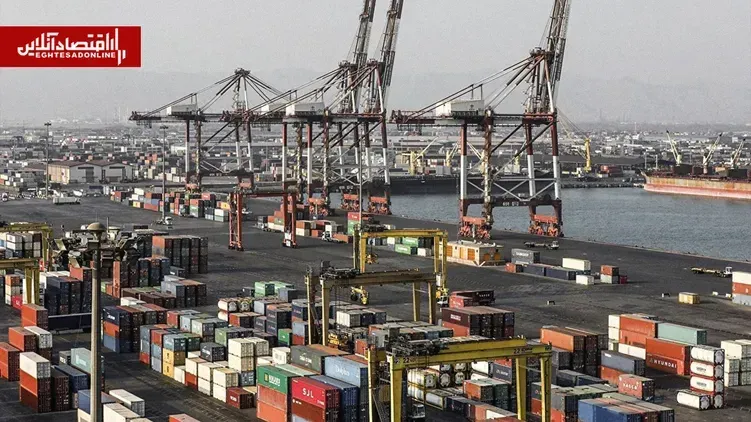
Iran’s neighbouring markets could provide an important opportunity to strengthen non-oil exports and ease economic pressures, but multiple government directives, foreign exchange obligations, currency volatility and difficulties repatriating export earnings continue to divert businesses’ attention from expanding into new markets, according to a senior Iranian trade official.
As Iran enters the second half of 2026, its economy faces a series of uncertainties ranging from political and security developments to foreign trade conditions, currency market volatility and declining household purchasing power.
In these circumstances, assessing the country's economic outlook requires examining different scenarios and the economy's ability to withstand potential shocks, rather than relying on a single forecast. Private-sector businesses, particularly exporters, are among those directly affected by economic and political developments and trade restrictions.
Mohammad-Ali Mohammadmirzaeian, Vice Chairman of the Non-Oil Exports Commission of the Iran Chamber of Commerce, said the country's economic outlook could not be accurately described through either absolute optimism or absolute pessimism.
Speaking to EghtesadOnline, he said Iran's economy was at a sensitive and decisive juncture, with risk management likely to be the defining challenge of the second half of 2026.
Iran's Economy Faces Three Possible Scenarios in the Second Half of 2026
Mohammadmirzaeian said war, trade and transportation restrictions, conditions surrounding the Strait of Hormuz, sanctions, currency fluctuations, inflation and declining purchasing power could directly affect domestic production and foreign trade in the coming months.
Referring to international institutions' assessments of Iran's economic outlook, he said the International Monetary Fund, in its July 2026 projections, forecast that Iran's economy would contract by 5.4% and inflation would reach approximately 68.9%.
Such projections, he added, highlight the difficult outlook facing the Iranian economy and the growing importance of managing the consequences of domestic and international developments.
Mohammadmirzaeian outlined three possible scenarios for the economy during the second half of the year.
The first scenario is relative stability. Under this scenario, political and military tensions would not escalate, transportation and trade routes would gradually return to normal, and policymakers would be able to manage the foreign exchange market and the supply of goods.
He said achieving relative stability would give the economy an opportunity to adapt to new conditions. If such stability were established, non-oil exports could play a more prominent role in economic activity and in generating foreign currency revenues.
The second scenario is a continuation of the current situation. This would mean neither a significant economic breakthrough nor the emergence of a new crisis.
Under these circumstances, businesses would continue to struggle with inflation, high financing costs, exchange rate volatility, difficulties transferring money and rising transportation expenses. Economic growth would also remain weak.
The third scenario involves an escalation of geopolitical and trade risks.
Mohammadmirzaeian warned that such developments could place additional pressure on foreign trade. If this scenario materialised, insurance and transportation costs would rise, oil exports and the supply of raw materials would face greater difficulties, and the consequences would directly affect domestic production and people's livelihoods.
Referring to the World Bank's assessment of Iran's economic outlook, he said the institution had also emphasised that the country's economic conditions would depend heavily on the duration and intensity of the conflict, the extent of damage to infrastructure, and disruptions to oil exports and trade routes.
Iran Must Shift from Crisis Management to Adapting to Crises
The Vice Chairman of the Non-Oil Exports Commission said Iran needed to change its approach to economic policymaking.
"The important point is that Iran's economy must move from an economy focused on crisis management towards an economy capable of adapting to crises," he said.
He argued that the country's economic plans could no longer be based entirely on the assumption that sanctions, war, banking restrictions or transportation disruptions would come to an end in the near future.
Instead, Iran must develop lasting solutions and economic structures suited to operating under existing constraints.
Relying on the expectation that crises will quickly end, he added, cannot provide a sound basis for economic planning by businesses or policymakers.
Non-Oil Exports Could Help Iran Withstand Economic and Sanctions Pressures
Mohammadmirzaeian said Iran's economy was not solely dependent on oil, pointing to the capabilities of the private sector, the country's non-oil export potential, neighbouring markets, regional trade and domestic production as resources that could help absorb some of the existing economic pressures.
He described non-oil exports as one of the country's most important potential drivers of economic growth.
However, he stressed that realising this potential would require exporters to spend less time dealing with multiple government directives, foreign exchange commitments, currency fluctuations and difficulties repatriating export earnings, and more time developing international markets.
The official also emphasised the importance of stability in economic policymaking.
He said maintaining and diversifying trade routes, alongside more predictable economic decisions, could ease some of the pressure on businesses and help limit the depth of the economic recession.
Three Priorities for Iran's Economy in the Second Half of 2026
Assessing the country's economic outlook, Mohammadmirzaeian described himself as cautiously optimistic. He stressed that his optimism did not mean underestimating the severity of economic conditions, but rather reflected his confidence in Iran's economic capabilities and the private sector's ability to confront restrictions and take advantage of available opportunities.
He identified three main priorities for navigating the economic challenges of the second half of 2026:
Reducing uncertainty and ensuring greater stability in economic policymaking.Facilitating trade and exports through reforms to foreign exchange policies.Preserving existing trade routes while developing new ones.
The member of the Iran Chamber of Commerce's Board of Representatives also highlighted the importance of expanding regional trade relations.
He said maintaining and expanding access to neighbouring countries, Central Asia and other regional markets could help diversify export routes and reduce Iran's dependence on a limited number of trade destinations and channels.
Mohammadmirzaeian concluded that if economic stability, export facilitation and the development of new trade routes were seriously pursued, Iran could prevent a deeper economic recession and lay the groundwork for a gradual recovery in investment and economic growth, even under difficult conditions.