


Visa Domino From Vienna to New York: Could Travel Restrictions on Iranian Officials Reach the U.N.?
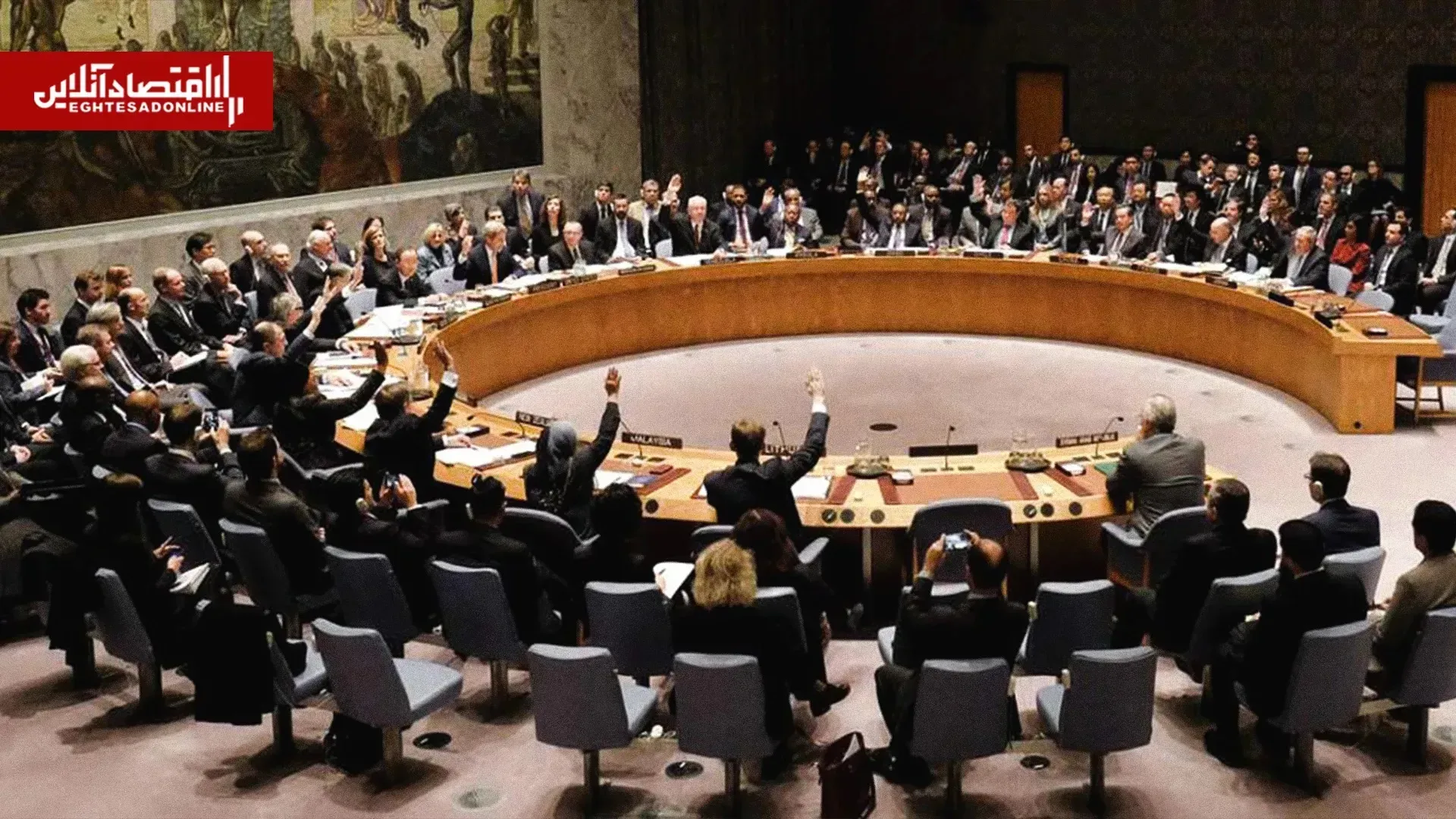
EghtesadOnline: Austria’s refusal to issue a visa to the head of Iran’s Atomic Energy Organization to attend the IAEA conference in Vienna has brought the legal dispute over the restoration of U.N. sanctions against Iran from the level of the Security Council into the practical sphere. The question now is whether the dispute over the validity of the snapback mechanism could also lead to travel restrictions on senior Iranian officials in New York.
Political Group: The first piece of the domino in the legal dispute between Iran, Russia and China and the United States and Europe over the snapback mechanism has begun to move.
Austria’s refusal to issue a visa to Mohammad Eslami, head of the Atomic Energy Organization of Iran, to attend the 70th General Conference of the International Atomic Energy Agency in Vienna may appear to be a diplomatic dispute, but in reality it could signal the entry into a new phase of the disagreement over the snapback mechanism.
Iran has described the decision as political and the result of U.S. pressure, and subsequently summoned Austria’s diplomatic representative. Austria, meanwhile, says it requested an exemption through the United Nations mechanism for Eslami’s trip, but the exemption was opposed by the United States because Eslami was on the sanctions list that existed before the nuclear deal.
Reuters reported that Washington opposed the travel exemption for Eslami and argued that his presence could contribute to Iran’s political propaganda. This is the first example in which the dispute over the validity of the Security Council sanctions that have been restored has turned into a practical obstacle to the travel of a senior Iranian official.
Two Different Narratives Over the Snapback
According to EghtesadOnline, the roots of the dispute go back to the activation of the snapback mechanism by France, Germany and Britain in 2025. Western countries believe that this action resulted in the restoration of previous U.N. Security Council sanctions against Iran, the same sanctions that had been suspended under the nuclear agreement.
Iran, Russia and China, however, do not accept this interpretation. Moscow explicitly argues that Resolution 2231 expired in October 2025 and that the mechanism for restoring the previous resolutions was not validly activated. Russia even stated at the recent Security Council meeting that there was no reason for the 1737 Committee to continue its activities.
By contrast, most Security Council members and Western countries believe that the sanctions have returned and that the 1737 Committee has also been re-established. However, the same committee has been effectively paralyzed in practice. China and Russia have prevented the acceptance of reports, the appointment of a committee chair and some related measures. A Security Council report shows that the committee has not held a formal meeting over the past year and that the dispute over the legitimacy of the snapback has prevented it from carrying out substantive work.
The current situation has therefore created an unprecedented contradiction. From the Western perspective, the sanctions have returned, but the mechanism for monitoring their implementation has been effectively stalled because of the dispute between the Eastern and Western blocs.
Eslami Case: The First Practical Test
Mohammad Eslami was placed on the list related to Resolution 1803 in 2009, and his travel ban, if the restoration of the previous sanctions is considered valid, requires an exemption mechanism. Austria, assuming that the sanctions had been restored, requested an exemption for Eslami from a committee that does not hold meetings, and the outcome was already clear.
This shows that even if the 1737 Committee cannot operate regularly as it did in the past, Western countries can use their own interpretation of the restoration of sanctions as the basis for practical decisions at the national and diplomatic levels.
From this perspective, the Eslami case could establish a precedent. If European countries henceforth apply the same logic to the travel of officials who were included on previous U.N. sanctions lists, the scope of the dispute will go beyond the nuclear issue and extend to Iran’s diplomatic activities.
Is New York Next?
The incident has fueled speculation about the president’s upcoming trip to New York to attend the United Nations General Assembly. Restrictions imposed by the United States are not unprecedented either. In 2025, the United States also imposed restrictions on the movement of the Iranian delegation in New York, and Tehran complained to the U.N. Committee on Relations with the Host Country about the failure to issue, or delays in issuing, visas for some members of the Iranian delegation.
However, there is a fundamental difference between Vienna and New York. Austria is the host of the International Atomic Energy Agency, while the United States is the host of the U.N. headquarters and has more specific obligations under the “Headquarters Agreement.” The United Nations has repeatedly emphasized that the host country is required to facilitate the entry of representatives of member states to the U.N. headquarters.
In 2025, the General Assembly also referred to U.S. obligations under the Headquarters Agreement regarding the failure to issue visas to officials from some countries, including Palestine. Therefore, the Eslami case cannot be taken as evidence that the United States will necessarily prevent Iran’s president or the entire Iranian delegation from entering New York.
Such a move would carry much higher legal and political costs for Washington. It is more likely that the dispute would initially emerge over the composition of the delegation, the timely issuance of visas and restrictions on the movement of certain officials.
A Small Case With Big Consequences
The visa dispute involving the head of Iran’s Atomic Energy Organization is the first clear sign that the dispute over the snapback mechanism has entered a stage in which its consequences can be seen in tangible form.
The more important consequence of this legal dispute is its domino effect. The dispute over the snapback mechanism had so far remained largely at the level of international law and the Security Council, but the Eslami case shows that the disagreement can also be transferred into governments’ executive decisions.
For Iran, this situation means a gradual reduction in its diplomatic room for maneuver, while the restoration of the six pre-JCPOA resolutions could increase international pressure on Iran.
But the dispute will also pose a major challenge for Europe. Should European countries implement U.N. sanctions based on the Western interpretation, even when China and Russia reject their legitimacy and the committee responsible for implementing them is unable to operate normally?
This situation could deepen the divide that has emerged at the United Nations and lead to further disagreement between the two Eastern and Western blocs.
If Russia and China continue to oppose the restoration of the previous resolutions, the United States and Europe cannot implement the sanctions on a broad scale. However, some domino effects following the cancellation of Eslami’s visa will become visible from now on.