


Araghchi Exchanges Messages with Qatari Mediators | Why Did Uzbekistan Join Iran-Oman Talks in Muscat?
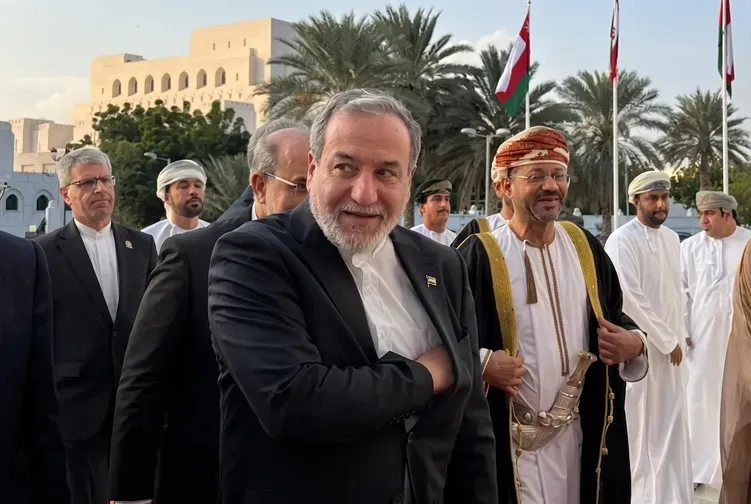
Iran’s diplomatic engagement with Oman and Qatar, alongside Uzbekistan’s participation in a trilateral meeting in Muscat, points to a broader regional strategy combining efforts to ease maritime tensions with plans to strengthen trade and transit links across Central Asia and the Persian Gulf.
Political Desk:The trilateral meeting between the foreign ministers of Iran, Oman and Uzbekistan in Muscat, at first glance, appeared to focus on expanding economic and transit cooperation. However, it took place as a Qatari delegation also travelled to Muscat to meet Iranian Foreign Minister Abbas Araghchi, reportedly as part of ongoing diplomatic contacts and the exchange of messages.
With maritime security in the Strait of Hormuz affected by regional military tensions and international trade routes facing disruption, Uzbekistan’s participation highlights how the consequences of the conflict extend beyond the immediate region, reaching landlocked countries in Central Asia. But why did Tashkent join Tehran and Muscat at this particular moment?
A Landlocked Country Seeking Access to Global Markets
The main reason for Uzbekistan’s participation lies in its geographic and economic position. Not only is the country landlocked, but it is also one of the few countries in the world that must cross the territory of at least two other countries to reach the sea. This geographical constraint raises transportation and export costs and makes Uzbekistan more dependent on the policies of transit countries.
Under President Shavkat Mirziyoyev, the government has made developing alternative trade routes a priority in recent years. Northern routes through Russia, eastern corridors via China, the Middle Corridor across the Caspian Sea and the Caucasus, and southern routes through Afghanistan and Iran all feature in Tashkent’s transit strategy.
Iran is an important option for Uzbekistan because of its road and railway networks and its access to southern ports. Shahid Rajaee and Chabahar ports could provide the country with access to the Persian Gulf, the Sea of Oman and markets in India and other international destinations.
A 2025 World Bank report on Uzbekistan’s transport and logistics development also highlights the importance of transit routes through Iran. However, these routes face several obstacles, including border-crossing difficulties, banking restrictions linked to sanctions and infrastructure shortcomings.
Connecting the International North-South Transport Corridor to Central Asia
One of the main issues discussed at the Muscat meeting was strengthening trade connectivity between Central Asia and the Persian Gulf and the Sea of Oman. This route could become part of the broader International North-South Transport Corridor (INSTC).
Originally designed to connect India with Russia and northern Eurasia through Iran, the INSTC is a multimodal network encompassing rail, road and maritime links. It has the potential to connect markets across South, Central and Northern Asia.
For Uzbekistan, access to this network would create new export opportunities and reduce its dependence on a limited number of existing routes. For Iran, closer cooperation with a major Central Asian economy could increase transit volumes and strengthen its position in Eurasia’s transportation network.
Where Economic Interests Meet Maritime Security
Despite the potential benefits of transit cooperation, maritime security remains one of the biggest obstacles to turning these ambitions into reality. The Strait of Hormuz is one of the world's most critical energy trade chokepoints, and any disruption can increase insurance premiums, shipping costs and the overall cost of international commerce.
In their joint statement, the three foreign ministers stressed the importance of restoring freedom of navigation and ensuring the safe passage of international trade. This position highlights how maritime security concerns extend beyond countries bordering the Persian Gulf, directly affecting the economic interests of landlocked states as well.
For Tashkent, insecurity in the Persian Gulf could undermine the attractiveness of southern trade routes and increase the cost of accessing global markets. For Tehran, continued instability and disruptions to shipping could also weaken the appeal of Iranian ports and transit infrastructure.
This is why negotiations between Iran and Oman over maritime arrangements are particularly significant. The two countries had previously discussed a phased framework for restoring safe navigation in August, including the establishment of a temporary maritime corridor and further technical negotiations on managing vessel traffic.
However, Uzbekistan’s participation in the latest meeting does not imply that it has endorsed every detail of such arrangements. Rather, it reflects shared economic interests in maintaining the uninterrupted flow of international trade.
Ultimately, the Muscat meeting brought together three distinct sets of interests: Uzbekistan’s need for access to maritime trade routes, Iran’s ambition to connect Central Asia with southern markets, and Oman’s interest in expanding its role in regional trade and diplomacy.
Turning this potential into an operational corridor, however, will require more than political agreements. Sanctions on Iran, banking restrictions, insufficient railway infrastructure, border-crossing challenges and insecurity along maritime routes remain significant barriers. Tashkent is also continuing to pursue competing routes through China, Russia and the Caspian Sea.
Two Complementary Channels of Regional Mediation
Araghchi’s visit to Muscat, however, was not limited to transit and economic cooperation. During the trip, the Iranian foreign minister met Sultan Haitham bin Tariq and Omani Foreign Minister Badr Albusaidi to discuss regional developments and ways to reduce tensions. A Qatari delegation, led by an adviser to the country's prime minister, also met with Araghchi.
The meeting followed Qatar’s ongoing mediation efforts and exchanges of messages between the parties. Qatar’s Foreign Ministry spokesperson confirmed that Doha continued to work towards bridging differences and reaching an agreement to end the war.
Araghchi, for his part, emphasized the importance of Qatar’s continued role in reducing regional tensions and the need for consultations among countries in the region.
Nevertheless, no official or unofficial reports indicated any concrete progress in the negotiations. This suggests that Iran and the United States have yet to bring their positions closer, with significant differences remaining between the two sides' respective conditions for an agreement.
The simultaneous diplomatic contacts with Oman and Qatar, alongside the trilateral meeting with Uzbekistan, suggest that Tehran is seeking to pursue economic diplomacy and political efforts to ease pressure from the naval blockade and sanctions within a broader regional framework.
Ultimately, the success of this approach will depend largely on reducing regional tensions and creating the conditions necessary to implement the proposed transit and maritime agreements.