


Gadi Eisenkot Faces Obstacles in Bid to Form Israel’s Next Government | Can Netanyahu Be Ousted?
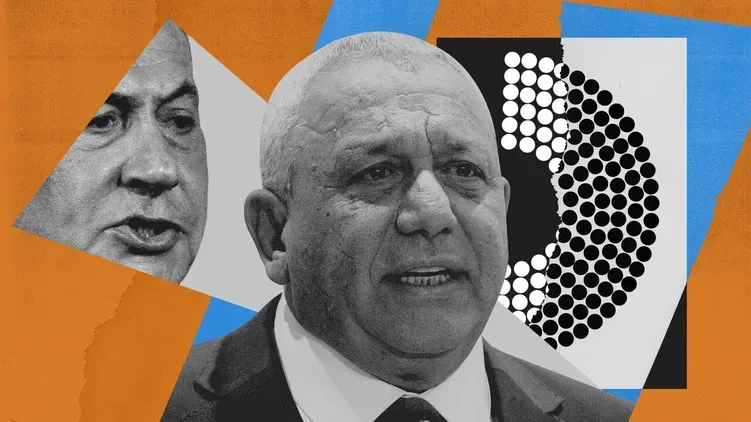
Gadi Eisenkot is facing significant obstacles in his efforts to form a new government and remove Benjamin Netanyahu from power. With the initial deadline for his government-formation mandate approaching, political negotiations in Israel remain deadlocked. Can Eisenkot overcome the remaining challenges and form a government, or will Netanyahu get another opportunity to stay in power?
Eisenkot has roughly two weeks left to complete his mission of forming a government and ending Netanyahu’s tenure as prime minister. Extensive political negotiations are underway across Israel, but so far they have failed to produce an agreement. Meanwhile, Netanyahu is making every effort to undermine Eisenkot’s chances, hoping that his mandate will expire and that he will subsequently be given the opportunity to form a government himself.
Eisenkot is now facing two difficult options: forming a government with the support of Arab parties, despite the political cost this could entail, or reaching an agreement with religious parties and potentially even Netanyahu’s Likud, a move that could undermine some of the opposition’s central electoral promises.
In his latest remarks, Eisenkot said that if negotiations to establish a broad-based government fail, he will move towards forming a “national emergency government.” Such a government would most likely need the support, or at least the abstention, of Arab parties in the Knesset to secure a vote of confidence.
How Much Time Does Eisenkot Have?
Following the election, Israeli President Isaac Herzog tasked Eisenkot with forming the next government. His initial mandate expires on December 6 (15 Azar). Herzog has the authority to extend the mandate by an additional two weeks, giving Eisenkot more time to negotiate. However, reports suggest that Eisenkot is reluctant to take the risk of seeking an extension.
According to The Times of Israel, Eisenkot is even considering presenting his proposed government to the Knesset for a vote of confidence before his mandate expires, potentially on November 28 or 29 (7–8 Azar).
An important point is that, under Israel’s parliamentary system, forming a government does not necessarily require holding 61 seats in the Knesset. A minority government can also take office if it secures a majority of votes among lawmakers participating in the confidence vote.
This means that a legal pathway exists for Eisenkot to overcome the obstacle of securing an absolute majority. The main challenge, however, remains obtaining sufficient political support from lawmakers, either through a formal coalition or outside one.
Three Possible Paths, One Fragile Coalition
Eisenkot is currently pursuing three possible routes to forming a government, each of which faces a significant obstacle.
The first option is reaching an agreement with ultra-Orthodox parties, namely Shas and United Torah Judaism, which together hold 13 seats. These parties have been among Netanyahu’s closest political allies for years. However, Eisenkot hopes to persuade them to cooperate with a new government by offering concessions on issues such as military service exemptions for Haredi men and budget allocations.
The difficulty is that one of the opposition’s major electoral promises was to end the widespread exemptions granted to ultra-Orthodox men from military service. The issue has become even more sensitive following years of war and growing manpower shortages within the Israeli military.
The second option is forming a national unity government that includes Netanyahu’s Likud party.
The Israeli prime minister has once again emphasized the need for such a government in recent days, presenting it as a response to the country's sensitive security situation. However, this arrangement would effectively allow Netanyahu to remain in power for another two years, something Eisenkot has strongly opposed so far. Under the proposed arrangement, the premiership would rotate between political leaders.
The third option is establishing a minority government that relies on the support of Arab parties. While this could provide a pathway to forming a government, it could also push internal divisions within the opposition coalition to a breaking point.
Two Major Obstacles Within the Opposition Camp
Eisenkot’s biggest problem is that Netanyahu’s opponents, despite appearing united during the election campaign, remain divided over how a new government should be formed.
Avigdor Lieberman, leader of the Yisrael Beiteinu party, has opposed any government that depends on Arab parties for support and has pledged not to vote in favor of such a cabinet. His party holds seven seats, and his position could seriously undermine Eisenkot’s plans for a minority government.
Naftali Bennett, the former prime minister and leader of the Together party, has also shown little willingness to support a minority government dependent on Arab parties.
Bennett prefers exploring the possibility of a national unity government with Netanyahu. However, he has stressed that he will not join a Netanyahu-led government without the participation of other parties from the opposition bloc.
A previously undisclosed two-and-a-half-hour meeting between Bennett and Netanyahu has further deepened existing divisions.
Sources close to Eisenkot’s coalition have described the meeting as an attempt to weaken the opposition bloc. According to Al Jazeera, Bennett subsequently raised the need to consider a national unity government during a meeting of opposition leaders.
Netanyahu Exploits Opposition Divisions as Iran Looms Over Political Debate
Netanyahu’s efforts to derail Eisenkot’s mandate have continued. By repeatedly calling for a national unity government, he is seeking to turn disagreements among Bennett, Lieberman and Eisenkot into an opportunity to remain in power.
He has also made Iran a central part of his argument for establishing a national unity government. Netanyahu argues that Israel needs a stable and broad-based administration to confront what he describes as imminent Iranian threats, claiming that a cabinet dependent on the support of Arab parties would be incompatible with the country's security requirements.
Eisenkot, in turn, has accused Netanyahu of mixing national security interests and the timing of military operations with political considerations and efforts to retain power.
The disagreement has become particularly significant as Israel and Iran remain locked in confrontation, with the possibility of renewed hostilities still unresolved.
How the Iran–U.S. War Is Affecting Israel’s Political Landscape
Regional developments are also shaping Israel’s domestic political calculations. As Eisenkot attempts to form a government, the deadlock in negotiations between Iran and the United States continues to influence the broader regional situation.
Donald Trump has so far preferred maintaining a naval blockade and economic pressure over resuming large-scale military strikes. Iran, meanwhile, is demanding the lifting of the blockade, the release of frozen assets and an end to hostilities before entering serious nuclear negotiations.
On Friday, Iranian Foreign Minister Abbas Araghchi said that messages were still being exchanged between Tehran and Washington through intermediaries. He added that Iran was seeking an agreement that would prevent another war.
Trump, however, said on the same day that Iran’s proposals for an agreement remained unacceptable.
This situation presents both an opportunity and a political risk for Netanyahu.
On the one hand, continued tensions with Iran could strengthen his argument that Israel needs a national unity government. On the other, using a security crisis as a political instrument to remain in power could expose him to accusations of prioritizing political survival over national interests.
Eisenkot, meanwhile, is seeking to counter this argument by emphasizing that operational and national security considerations must be kept separate from partisan political interests.
What Happens Next?
Under the current circumstances, Netanyahu’s removal from power is neither inevitable nor out of reach.
In terms of parliamentary numbers, Eisenkot has the potential to form a government. However, he has yet to resolve the internal divisions within his opposition bloc over two fundamental issues: cooperation with Arab parties and concessions to religious parties.
If Eisenkot can persuade Bennett and Lieberman to accept a common solution, or secure support from Arab parties without formally bringing them into the governing coalition, the formation of a new government remains possible.
Even then, a cabinet established amid ideological divisions and dependent on external political support would face serious challenges in maintaining stability and remaining in power.
If Eisenkot fails to form a government, Israeli President Isaac Herzog will likely give Netanyahu an opportunity to do so. Should Netanyahu also fail, early elections would follow.