


Netanyahu Seeks to Drag Trump Into Another War | How Long Can Iran and the US Remain in Limbo?
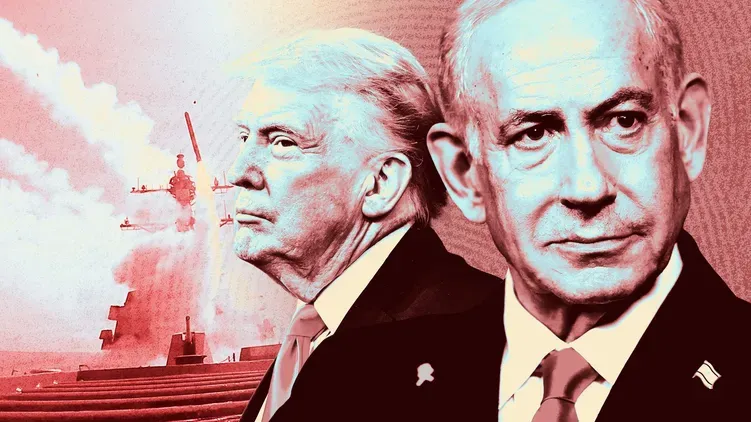
Iran and the United States remain locked in a prolonged standoff, with negotiations stalled, economic pressure mounting and the threat of renewed military confrontation still looming. As Qatar seeks to revive diplomacy, Netanyahu is reportedly pushing Trump toward another war with Iran.
Speculation that Iranian oil tankers would move to break the naval blockade has not materialized, while exchanges of messages between the two sides continue.
Although Iran insists that seven conditions must be met before negotiations can begin, the continuation of the naval blockade and the escalation of US sanctions indicate that the two sides remain far apart from an agreement. The question now is: what direction are Iran and the United States heading?
Preconditions for Negotiations or Leverage for Pressure?In his latest remarks, Iran's chief negotiator, Mohammad Bagher Ghalibaf, once again emphasized Iran's seven conditions. He stated that no negotiations with the United States to end the war would take place until these conditions were fulfilled.
Although no official list of the seven conditions has been released, unofficial reports and accounts suggest that they include lifting the naval blockade of Iranian ports, guaranteeing the safe passage of commercial and oil vessels through the Strait of Hormuz, removing unilateral sanctions, authorizing oil exports, releasing Iran's frozen assets, ending the war on all fronts, and formally declaring the end of the war.
These demands indicate that, from Tehran's perspective, accepting a ceasefire without lifting the naval blockade and easing economic pressure would effectively consolidate a situation in which the United States could maintain sustained pressure on Iran without engaging in an all-out war.
Ghalibaf has accused Washington of seeking to impose a state of "neither war nor peace" on Iran. He has also warned that if the United States launches another military operation, Iran could expand the geographical scope of the battlefield. The commander of Iran's Islamic Revolutionary Guard Corps (IRGC) has echoed this warning, saying that the next war would no longer be confined to the region.
Is the US Seeking a Limited Agreement?On the other side, Donald Trump's administration has shown no indication that it is prepared to accept Iran's demands in full. In recent days, the US president has said that Tehran wants an agreement to end the war, but that Iran's proposals are unacceptable. He has also reiterated his position that Iran must not be allowed to acquire nuclear weapons.
Trump has even threatened that if negotiations fail, military operations against Iran could resume in the new year. If Trump decides to restart the war, he may have until January, when the new Congress takes office and Democrats are expected to gain a majority.
The New York Times has also reported that Israeli Prime Minister Benjamin Netanyahu is seeking to draw Trump into renewed conflict with Iran.
However, for now, the White House appears focused on intensifying economic pressure. The US Treasury Department has once again sanctioned more than two dozen currency exchanges, intermediary companies and individuals linked to Iran's financial networks. The stated aim is to disrupt networks that Washington says play a role in transferring oil revenues and circumventing sanctions.
Reuters has also reported that the United States' financial intelligence network identified nearly $15 billion in potentially related financial activity involving these networks through August 2026.
These measures indicate that the Trump administration has no intention of abandoning sanctions as a bargaining tool under the current circumstances.
The Last Path Back to the Negotiating TableDespite the diplomatic deadlock, efforts to find a diplomatic solution have not stopped. Qatar has played an important role in relaying messages between Tehran and Washington in recent weeks. On Monday, the Qatari prime minister met with JD Vance and US Secretary of State Marco Rubio.
According to reports, mediators have proposed that the two sides first reach a limited arrangement to reduce disruptions in the Strait of Hormuz and provide Iran with some sanctions relief. Broader negotiations over Iran's nuclear program would then resume.
However, no new agreement has been announced so far. It also remains unclear to what extent the Trump administration supports Qatar's mediation efforts.
The Washington Post has reported that, following the Republicans' defeat in the midterm elections, Trump told Vance to shift his focus away from negotiations with Iran and toward domestic issues in the United States. If so, responsibility for the Iran negotiations may have been transferred to Marco Rubio. These developments have added to the uncertainty surrounding the White House's strategy toward Iran.
What Is the Most Likely Scenario?Under current circumstances, an immediate return to an all-out war does not appear to be the most likely scenario, despite continued limited attacks and military threats.
The high cost of military operations, concerns among regional and European countries, and the lack of a clear outlook for another war have reduced Washington's incentive to launch a new large-scale military campaign. In Tehran, economic pressure, the need to rebuild infrastructure, and the high cost of renewed conflict are also discouraging Iran from initiating another confrontation.
However, a swift comprehensive agreement also appears unlikely. Disagreements over the naval blockade, sanctions, control and security of the Strait of Hormuz, and Iran's nuclear program remain unresolved.
Moreover, the collapse of the Islamabad understanding has demonstrated that even an initial agreement may not last without a clear mechanism for implementing commitments and providing mutual guarantees.
Therefore, the most likely short-term outlook is a continuation of the neither-war-nor-peace situation, accompanied by efforts to reach a limited, phased agreement.
Such an agreement would likely begin with reducing tensions in the Strait of Hormuz and easing some economic restrictions. If successful, it could pave the way for renewed nuclear negotiations and a formal end to the war.
Nevertheless, this prolonged and exhausting situation would continue to leave the threat of a wider war hanging over the region.