


Arab Leaders Could Shape Trump’s Decision on Iran War
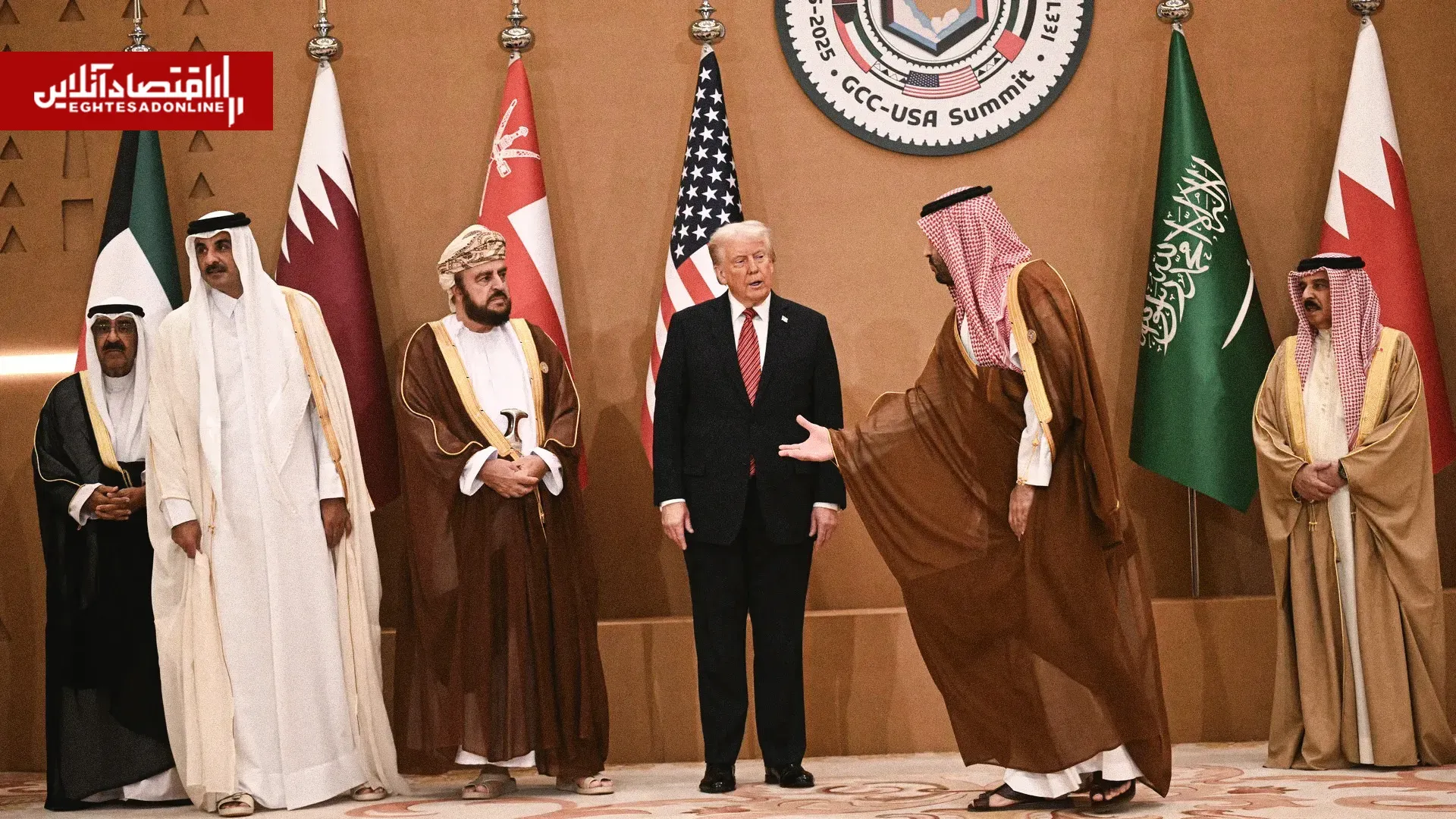
EghtesadOnline: Mohsen Rezaei has said that Iran’s conditions for ending the war have been conveyed to the United States through mediators, while Donald Trump has deferred his decision on whether to continue the war with Iran until his meeting with Arab leaders. The meeting could influence whether the United States moves toward further escalation or negotiations with Iran.
Political Group: More than seven months have passed since the U.S.-Israeli war with Iran began, and the two sides once again appear to be facing a choice between war and a deal. The secretary of Iran’s Supreme National Security Council says messages have been exchanged between Iran and the United States and that the White House must respond to Iran’s proposal.
At the same time, Donald Trump has claimed that large-scale attacks could resume while also saying that Iran is ready for a deal. But the advance of the Houthis along the Red Sea coast, pressure on Saudi Arabia, disruptions to energy routes and the approaching U.S. midterm elections have complicated the situation. The United States now appears caught between restarting a broader war and pursuing negotiations and a limited agreement. There have also been reports of a U.S. proposal for a comprehensive agreement with Iran.
Why Is Trump Threatening Renewed Attacks?Donald Trump has sent two seemingly contradictory messages about the future of the war with Iran within a matter of days. On the one hand, he has spoken about the possibility of renewed large-scale attacks and even the “destruction” of the Iranian government, while on the other hand claiming that Tehran now wants a deal and that the war could end soon.
Some media outlets reported that Trump said he was approaching a “big decision” and had to decide whether to resume large-scale attacks against Iran. At the same time, he said that his upcoming meeting with the leaders of six Gulf Arab countries could influence his decision on the next stage of the war. The meeting is scheduled to take place on the sidelines of the United Nations General Assembly in New York.
A day later, however, his tone changed. Trump said Iran “wants to make a deal” and claimed that Tehran was under economic and military pressure. He also said, for the first time in this context, that Washington was negotiating with the Houthis.
Trump’s behavior in recent months has shown that military threats and negotiations are moving forward simultaneously. A recent analysis by the Center for Strategic and International Studies also described this situation as “negotiating alongside war.” In such a situation, each side attempts to use military pressure to strengthen its position at the negotiating table.
In this context, Mohsen Rezaei, secretary of Iran’s Supreme National Security Council, has spoken about Iran’s conditions for ending the war and said that the key question is how the U.S. president will respond to those conditions. According to Rezaei, Iran’s conditions include an end to the war on all fronts, the release of frozen assets and an end to the naval blockade.
The United States will likely also put forward a proposal for an immediate and comprehensive agreement with Iran over the Strait of Hormuz and the nuclear issue.
Therefore, Trump’s renewed threats cannot necessarily be interpreted as a final decision to launch a new attack. At the same time, the threats could serve as a tool to pressure Tehran into making further concessions and to determine the future of a war that Washington cannot maintain indefinitely in its current form.
Is the Strait of Hormuz Decisive in the War?One of the most important changes in the current equation is the Strait of Hormuz becoming a central focus of negotiations. Over the past several months, Washington has sought to increase the passage of oil tankers through the waterway while simultaneously putting pressure on Iran’s oil exports. Brad Cooper, commander of U.S. Central Command, has even claimed that more than one billion barrels of crude oil have been transported through the Strait of Hormuz by Gulf partners.
Iran, however, claims that it controls the Strait of Hormuz.
Meanwhile, new attacks on Saudi infrastructure and the advance of the Houthis near Bab al-Mandab have increased the vulnerability of global energy markets. In effect, Iran has managed to turn the Strait of Hormuz into a negotiating lever, while the United States is attempting to reduce this leverage through military presence and control of maritime routes.
Therefore, any negotiations or agreement would have to address several key issues beyond the nuclear file.
Bab al-Mandab: A New Front in the War?In recent weeks, the issue of Bab al-Mandab has also been added to the equation. The Houthis have made significant advances along Yemen’s western coast, taking control of the port city of Mocha and a strategic island near Bab al-Mandab.
These developments have placed a large part of Yemen’s Red Sea coastline under the group’s control. The issue becomes more important when considering that, while Hormuz is the route through which oil from the Gulf reaches global markets, Bab al-Mandab is one of the vital routes for the movement of energy and goods between the Indian Ocean, the Red Sea and the Suez Canal.
The Houthis are now in a position to affect Saudi oil exports on the one hand and maritime security in the Red Sea on the other. Therefore, Trump’s claim that he is negotiating with the Houthis is significant, although it remains unclear how close it is to reality, as the Iran-aligned Houthis have so far denied it.
The Cost of a Prolonged Standoff for Iran and the U.S.Although the naval blockade has had and will continue to have significant consequences for Iran’s economy, the current prolonged situation is not cost-free for the United States either.
The U.S. news outlet Axios has reported that American officials believe U.S. forces cannot remain in the current situation indefinitely and that Washington will ultimately have to decide on the war’s ultimate objective.
At the same time, the war has created costs for the U.S. economy. CBS, citing an official estimate, reported that the cost of the war to the U.S. Department of Defense had reached at least $33.4 billion by the end of June. The figure includes the costs of ammunition, equipment and ongoing operations.
Higher energy prices have created additional pressure. As a result, Trump faces a difficult equation. Continuing the war is costly, but ending it without achieving a result that can be presented as an outcome is also not easy for his administration.
Three Paths Ahead for Iran and the United StatesTaking the current developments together, three main paths can be considered, with the behavior of the various actors in the coming days potentially strengthening or weakening each one.
The first scenario is a return to negotiations. In such a situation, an initial agreement could focus on issues such as reducing hostilities, ensuring maritime security in the Strait of Hormuz, easing the blockade, halting certain attacks and then moving toward the nuclear issue. This path is consistent with Trump’s recent statements about Iran’s readiness for a deal and his claim that the United States is negotiating with the Houthis.
The second path is a limited and phased agreement, which could be more realistic than a comprehensive deal. Under such an arrangement, the two sides could first reach an understanding on reducing tensions and reopening energy routes, followed by negotiations over the nuclear issue and other disputes.
The third path is a return to a broader war. If Trump concludes that the current economic and military pressure has failed to force Iran to accept Washington’s conditions, further military escalation would remain an option. However, the implementation of such an option would depend to a significant extent on the views of the Gulf states, as a broader war and potential Iranian retaliation could impose heavy costs on them.
Trump’s threats could pave the way for negotiations with Iran, but if talks fail to make progress on the Strait of Hormuz, the naval blockade, sanctions, the nuclear issue and the guarantees required by both sides, the possibility of renewed war could also return.
In this context, Trump’s meeting with Arab leaders will be particularly significant, and the coming weeks could determine the future course of the war.